Like the numeral 3, the numeral 5 is usually omitted since it is so common. Sometimes you will see a 5 by itself, which reinforces that a root position chord should be played.
The numeral 5 is not abbreviated from a 6/5 chord, since without the 5, the chord would be indistinguishable from a 6/3 chord. The full figure here is 6/5/3.
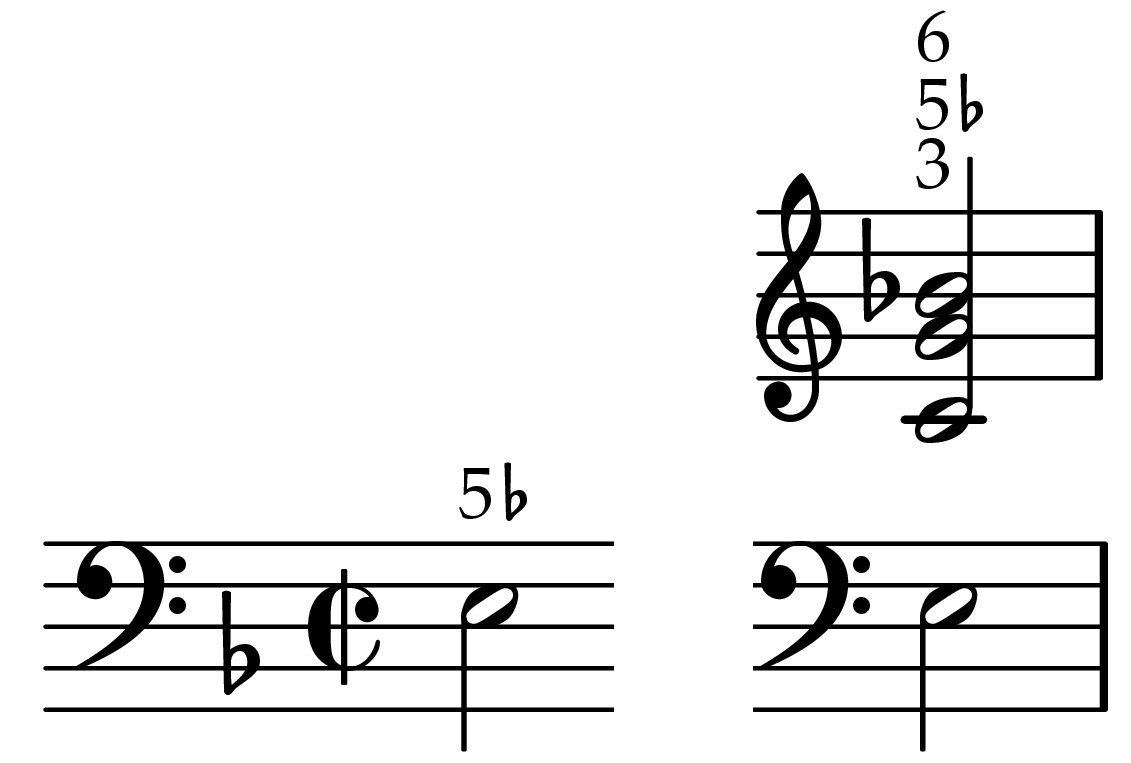
By far the most common usage of the numeral 5 is the "flat five." This is found as flat-5; 5-flat; and slash-5. When this figure is by itself, it is short for 6/flat-5/3. This is a dominant seventh chord in first inversion. In this chord the fifth above the bass is a diminished fifth. So, the figure itself is referring to the fact the fifth is diminished, not that it literally needs a flat. The diminished fifth is so special and different from the perfect fifth that composers will specify it in the figures, even when a chromatic alteration is not necessary.
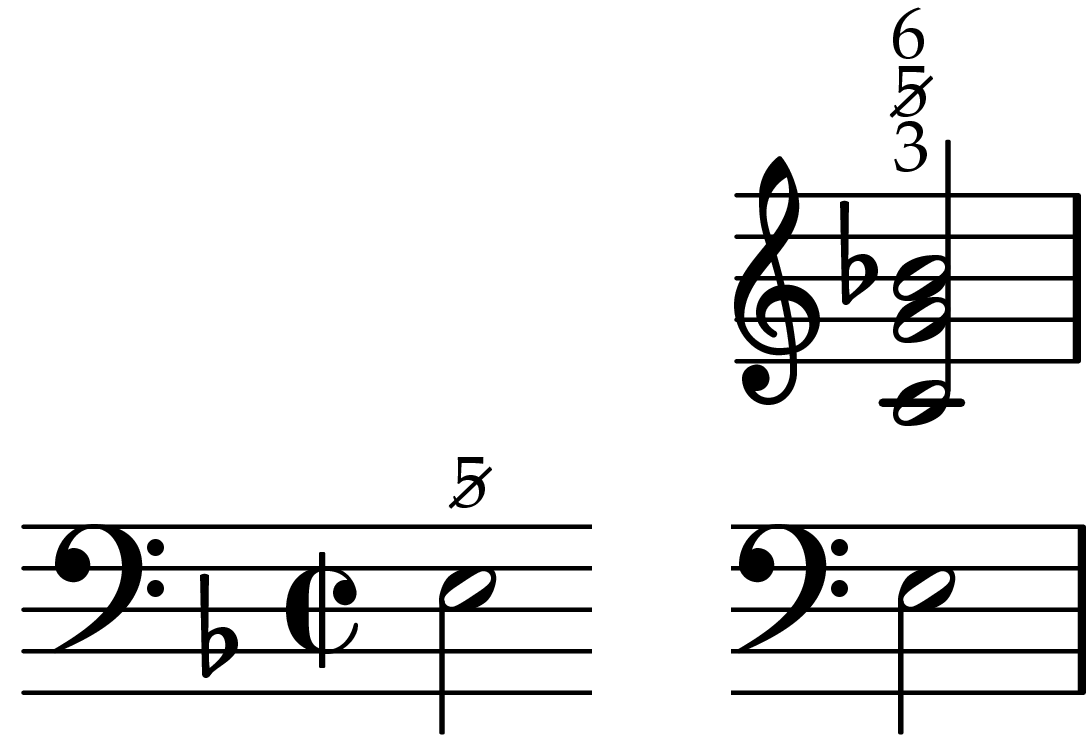
And here’s the “slash-five,” which means the exact same thing. Think of the slash as ruining the perfect number 5, rendering it imperfect.
The slash-five (or the flat-five) by itself is a VERY COMMON CHORD. You must immediately memorize that it is short for 6/flat-five/3.
Note that the flat-five can be in other figures besides 6/flat-five/3. In those cases it is simply referring to the interval of the flatted fifth.