The seventh is a special dissonant interval that normally resolves down by step to a consonance. There are three main usages of the numeral 7.
1) Functional seventh chords
In a functional seventh chord, when the seventh resolves down by step to a consonance, it is accompanied by a chord change. The V7-I cadence has a functional seventh chord in it.
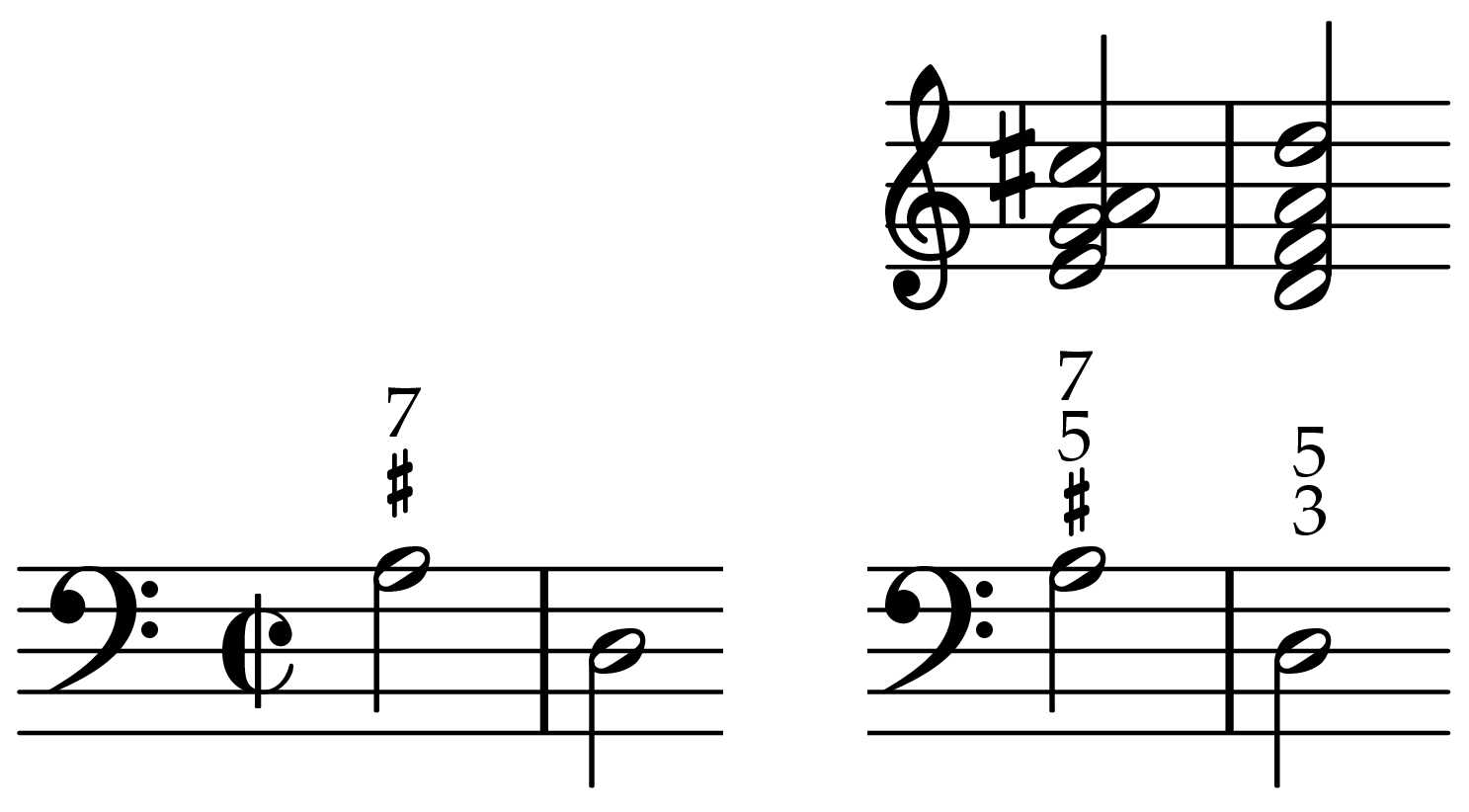
In functional seventh chords, the full figure is 7/5/3. Sometimes we just play 7/3. Obviously you can’t omit the 7, or it won’t sound like a seventh chord. You can’t omit the 3, or it won’t be possible to hear the quality of the seventh chord.
2) A 7-6 suspension (or a 9/7 – 8/6 suspension)
In a 7-6 suspension, when the seventh resolves down by step, the chord doesn’t change. All the other voices wait around until the seventh resolves.
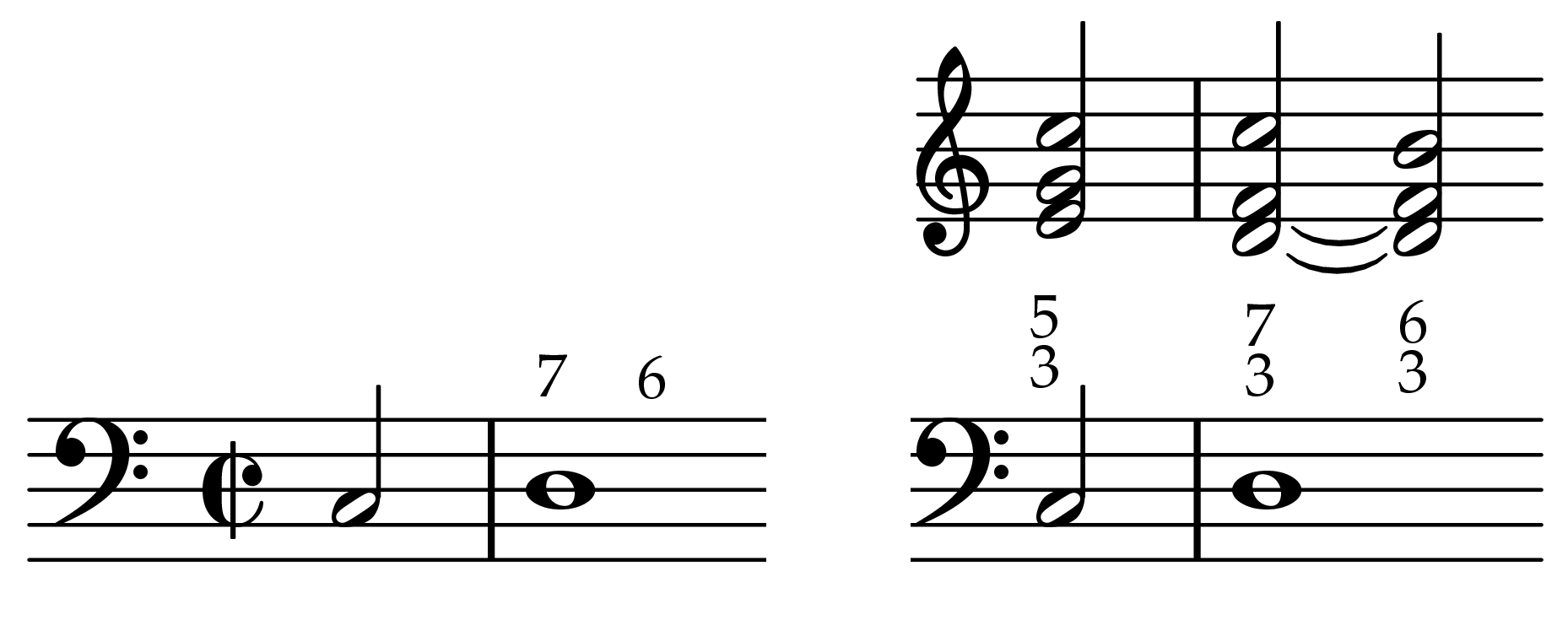
The full figure is 7/3.
3) A passing seventh chord
In a passing seventh chord, the seventh doesn’t act like it should (it doesn’t resolve down by step). A passing chord isn’t really a chord in the way we usually think of them, you can see in the example below that this chord is created by linear motion in the two lower voices.
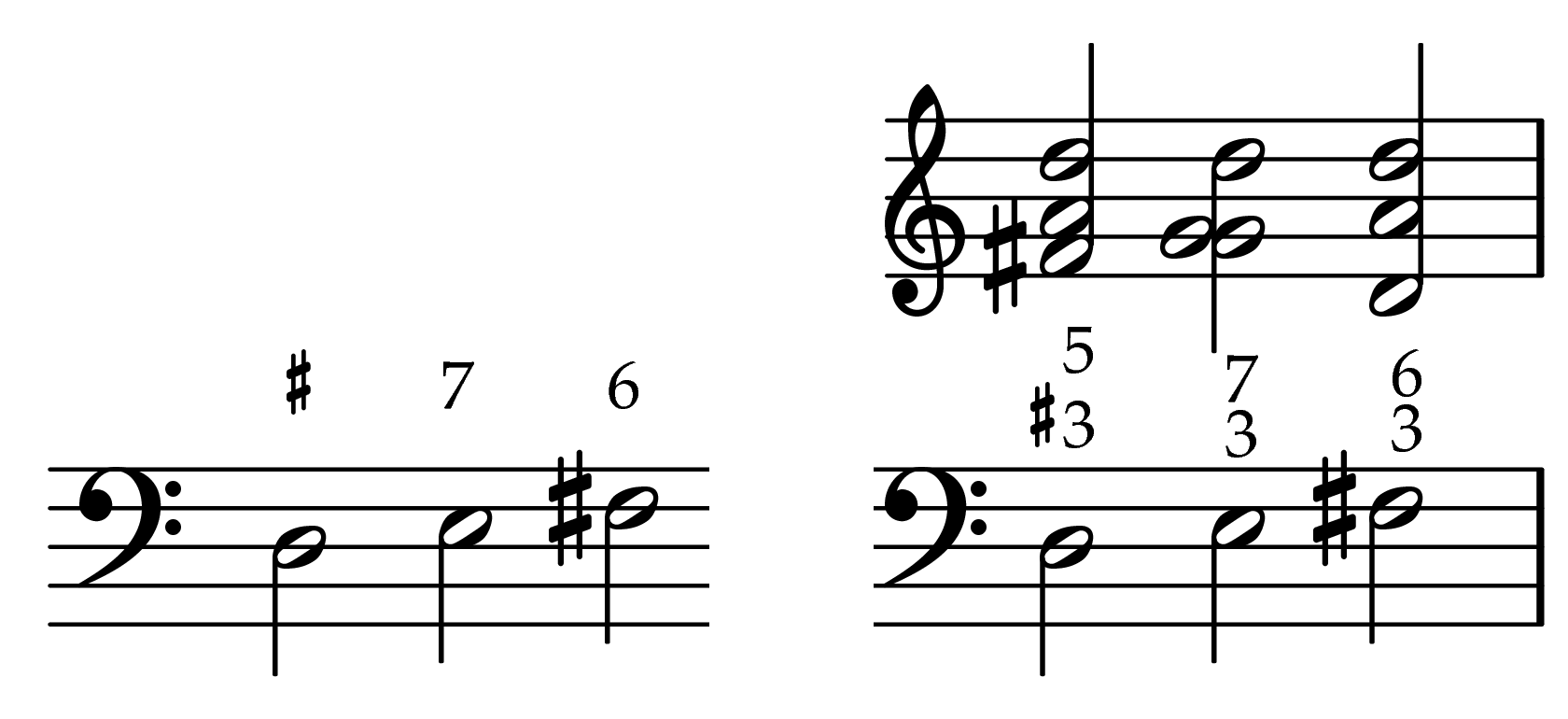
In a passing seventh chord, the full figure is almost always 7/3. If you throw a 5 in there, you’re going to have terrible difficulties with parallels.