Suspensions are generally the only non-chord tones that receive their own figures. This is because suspensions are a basic building block of tonal music. They connect beats together, and the dissonance they create makes a beat sound strong.
There are three parts of the suspension: the preparation, the suspension, and the resolution. Generally, suspensions resolve down, but they can also resolve up.
In this class, you MUST play the preparation, suspension and resolution
in THE SAME VOICE.
In other words, you can't jump to or away from the dissonance. The following is an example of this mistake. It’s not the worst thing in the world, of course, and unprepared dissonances can sound really dramatic on occasion.
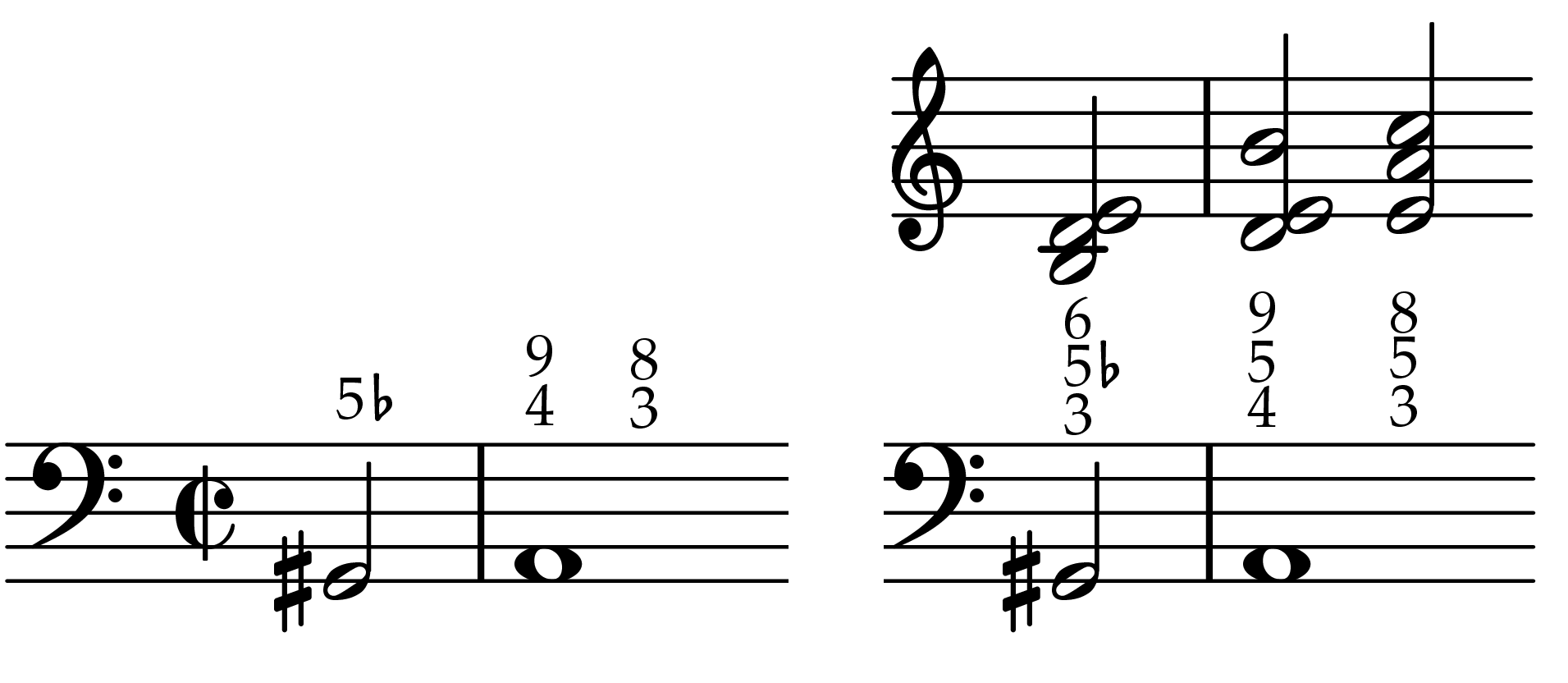
However, we follow this rule to help you understand the connective nature of suspensions. If you treat a suspension like any other chord that has no relation to the previous chord, you'll be missing a basic tenet of harmony.
An important note: a suspension isn’t required to be tied to the preparation. In fact, if you are playing one on the harpsichord or piano, you’ll need to restrike it, or no one will hear it, since those instruments decay so quickly.
There are four main types of suspensions: The 4-3, the 7-6; the 9-8; and compound suspensions.
The 4-3 suspension.
The full figure is 5/4 -5/3.
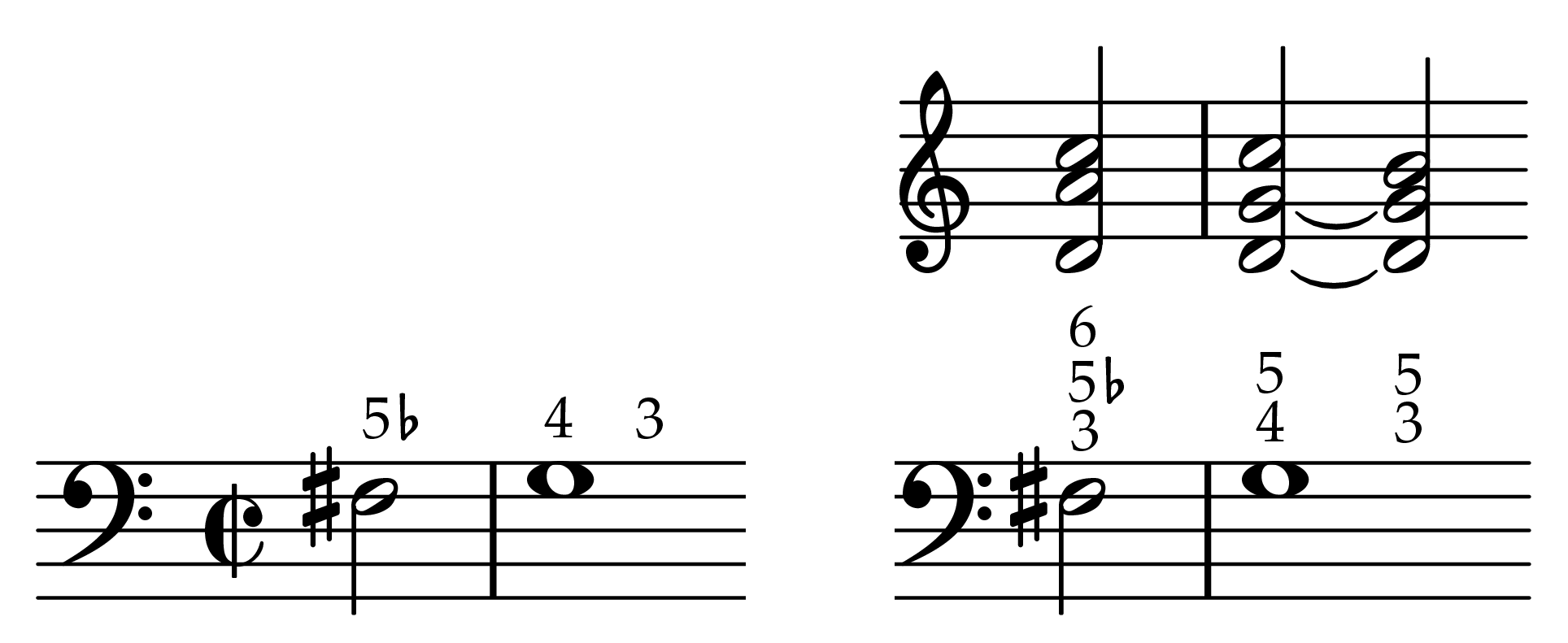
The five-flat is a special chord. Read “Figures with the numeral 5” for more information.
The 7-6 suspension.
The full figure is 7/3- 6/3.
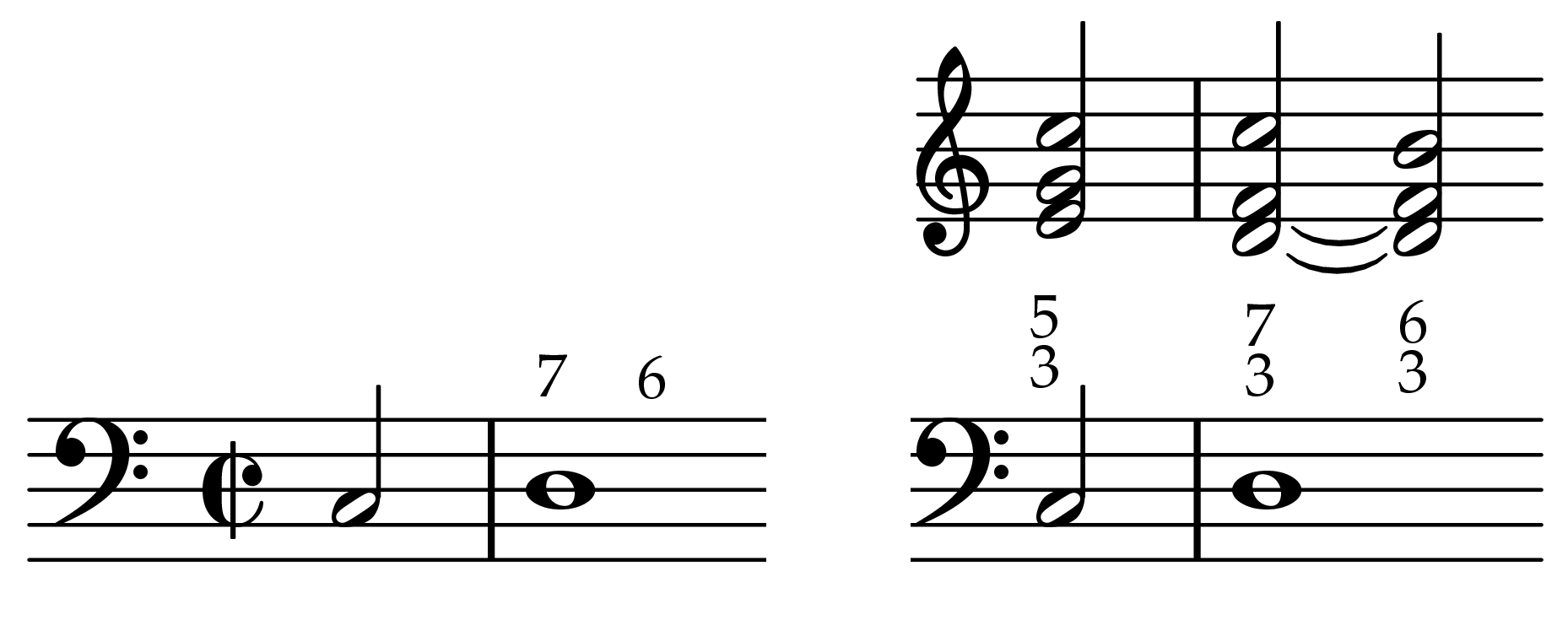
Usually you don’t play 7/5/3 unless the next chord is 6/5/3.. Sometimes we just add the 5 to the 7/3 anyway. It softens the edge of the 7-6 suspension, which can sometimes be a little prickly. Playing the 5 can also get us out of some parallel issues when we are playing in four parts.
The 9-8 suspension.
The full figure is 9/5/3 - 8/5/3.
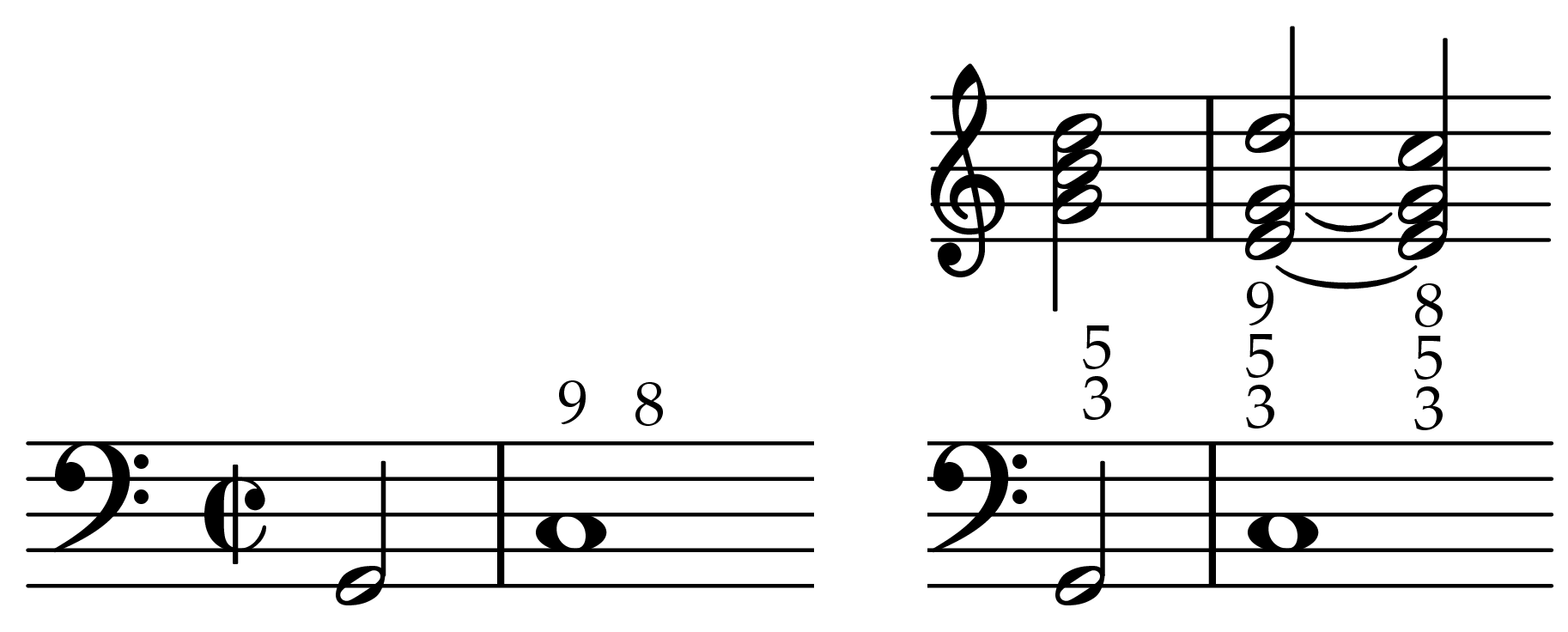
This suspension sounds a little like pop music to me – kind of cheesy but also nice to listen to.
The 9/7-8/6 suspension.
The full figure is 9/7/3 - 8/6/3. For me, this is one of the most complex and beautiful sounds in tonal music. It is a quintessentially French sound.
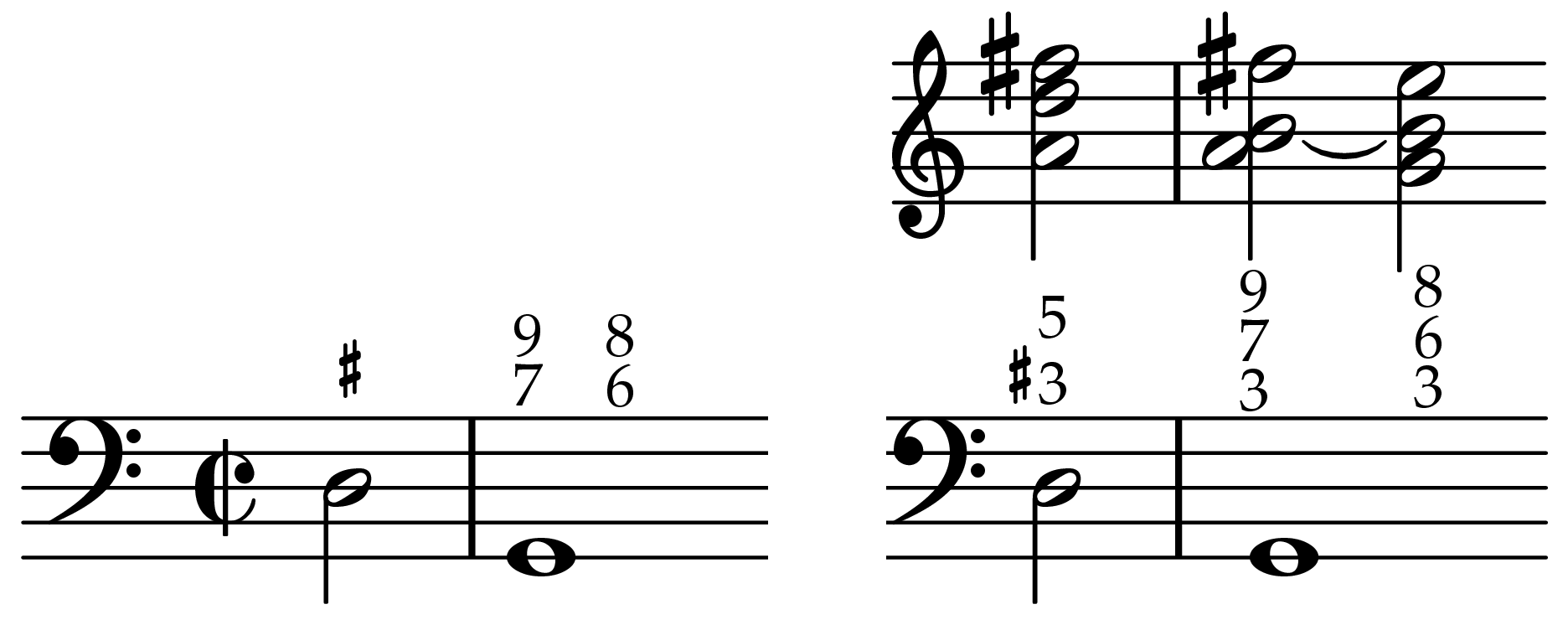
Usually you don’t play 9/7/5/3 but adding a 5 (even sometimes an augmented 5) can sound very nice. Notice in the above example that the figure 7 technically should be sharped. The sharp in front of the seven is assumed since the previous chord has an F# in it. Not bothering with this extra figure is normal.
Occasionally you'll see an augmented fifth, in which case the full figure is 9/7/#5/3 - 8/6/3.
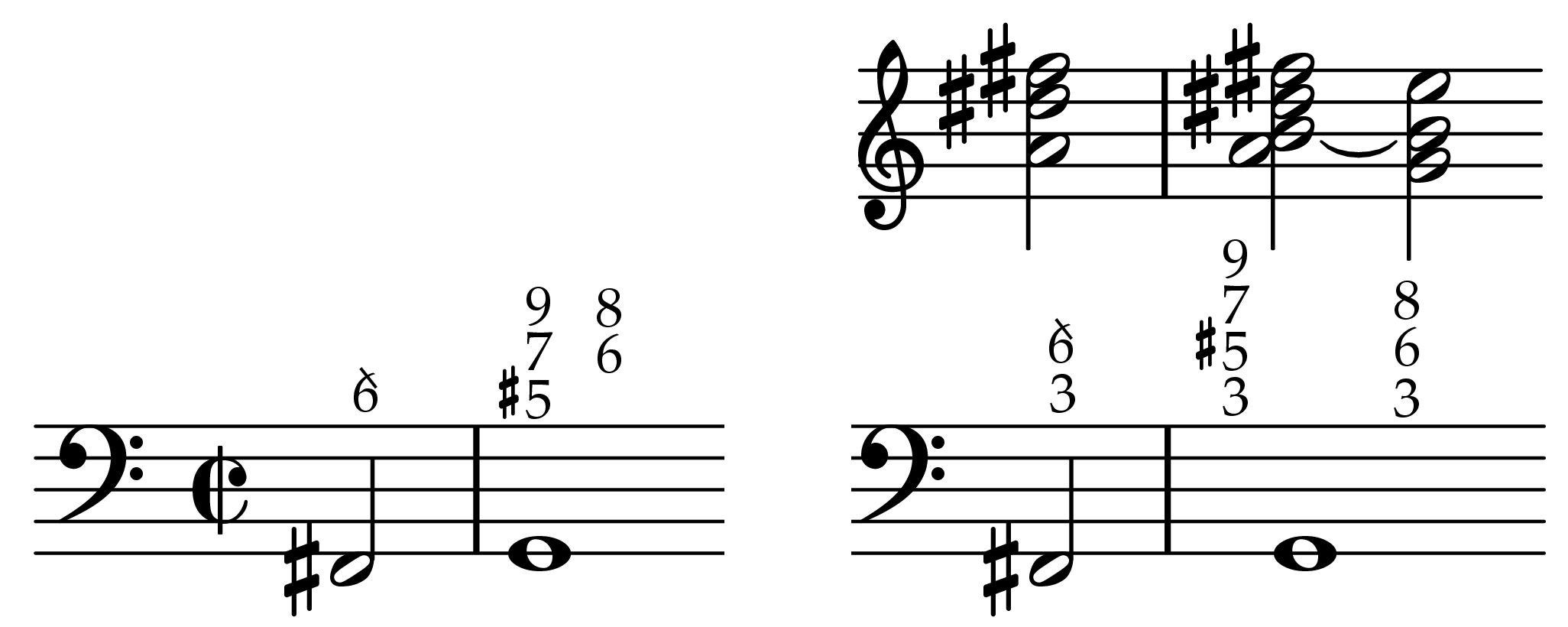
This imposing and scary figure is actually very easy to play. It’s almost always a dominant seventh chord in the RH over the third scale step of the key in the LH. Here we’re in E minor, so we play a B7 with our RH on the 9/7/#5/3. No problem! It also requires playing in five voices for a bit.
The 9/4-8/3 suspension.
The full figure is 9/5/4 – 8/5/3.
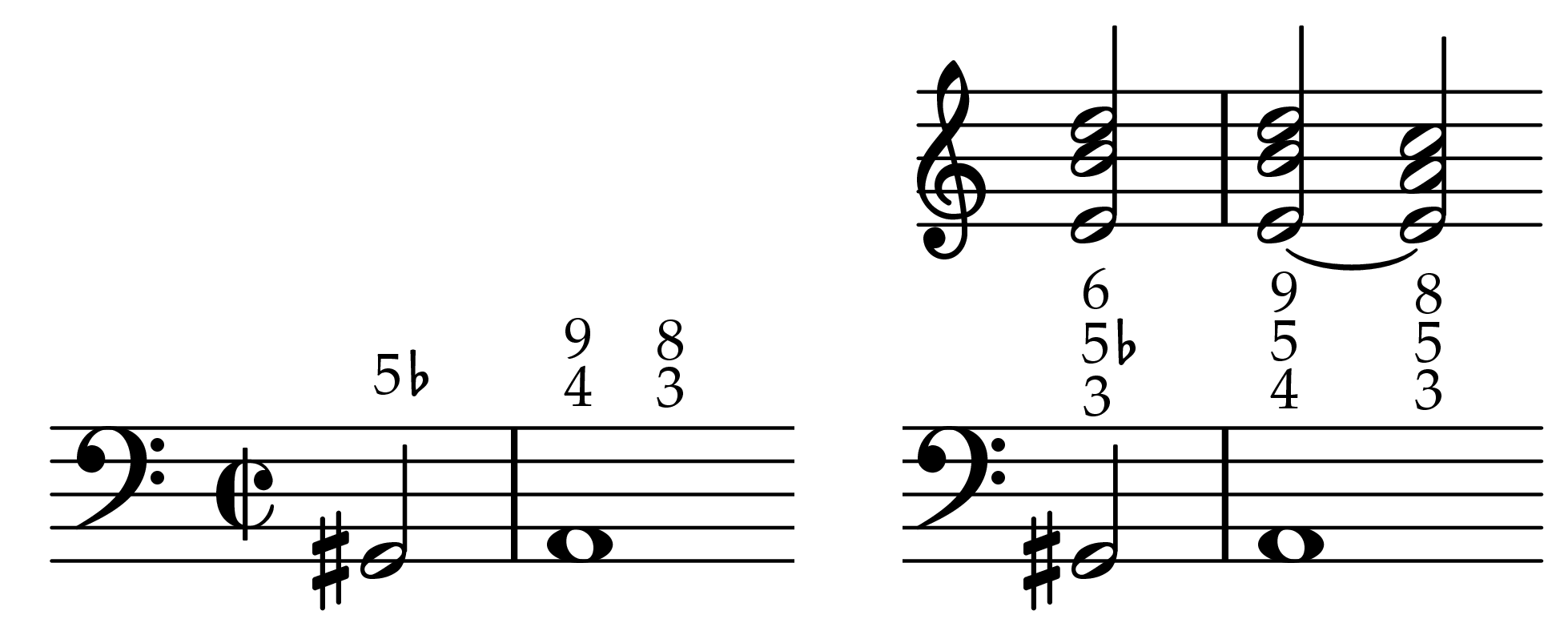
Sometimes you can omit the 5.