The only real difficulty in learning figured bass is the profusion of abbreviations. Why all the abbreviations? Why don’t composers just write down exactly what they want?
Here’s what that would look like.
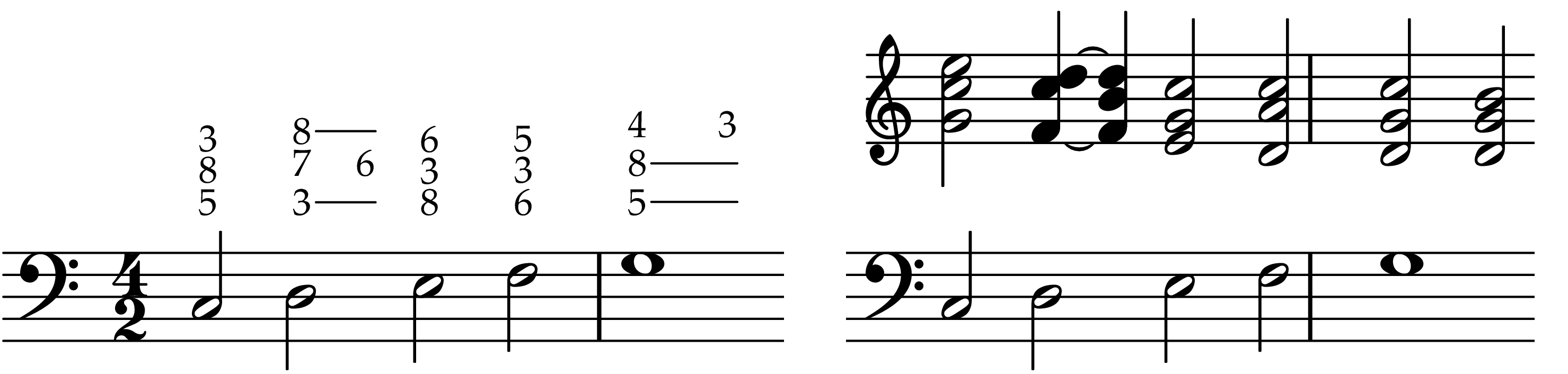
It’s a jumble of numbers, and hardly takes up less space than writing it out in score. Also, we don’t care about exact placement (soprano/alto/tenor), we just need to play the chords with good voice leading. Writing out every single numeral gives us a lot of information we don’t need.
Here’s what that passage looks like using abbreviations.
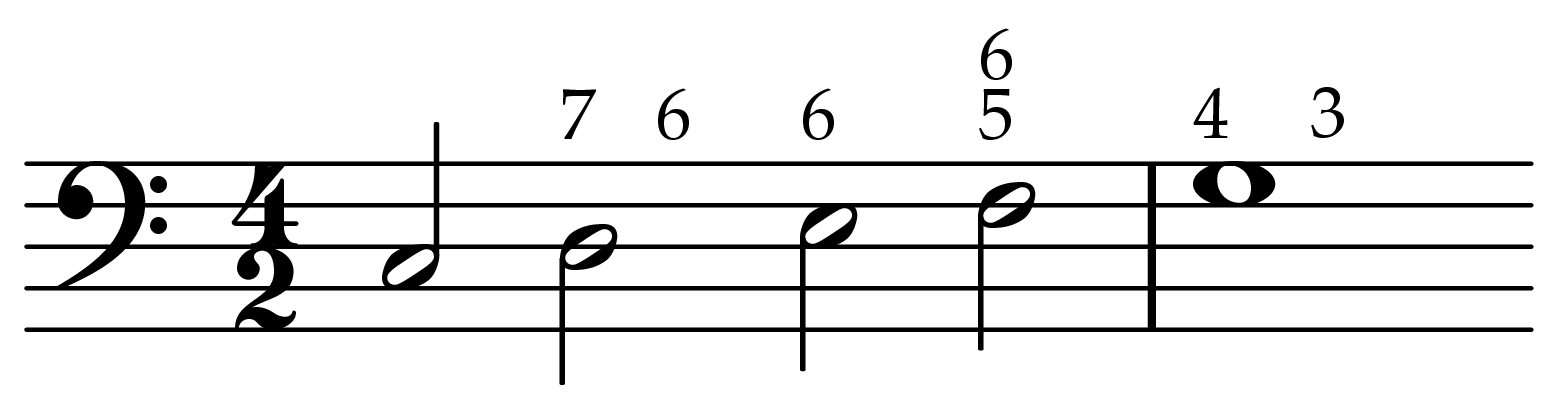
No unnecessary information, and it’s much easier to read. And it’s easier for the composer to write down.
The first rule of abbreviations is
we eliminate all unnecessary
3s, 5s and 8s
So usually, a bass note without any figures above it should be played as a 5/3 chord. There’s one major exception to this rule: if the bass note is a passing tone, it also does not get any figures. You need to use context to decide whether a bass note gets a new chord or not.
In the example below, you would not play a new chord above the F# in the bass.
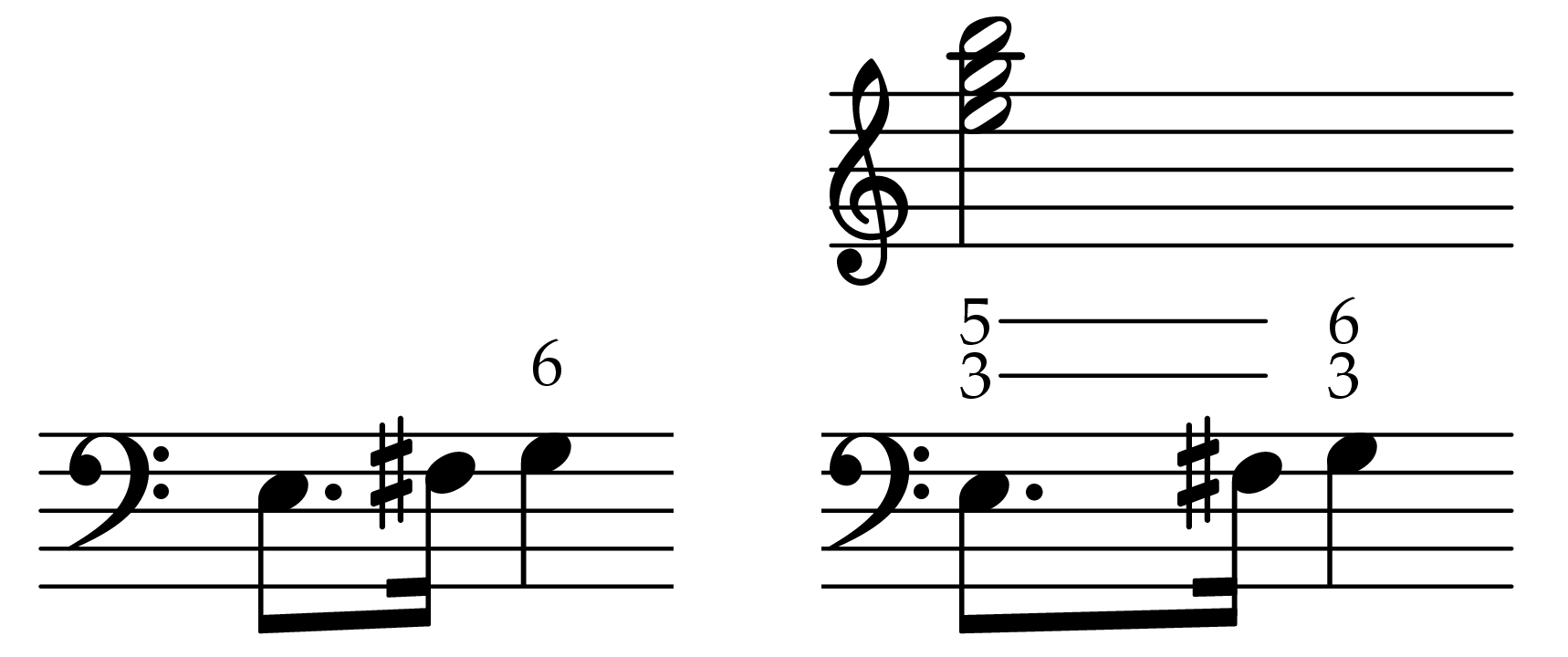
This is also sometimes the case with chordal skips in the bass. In the example below, you would not play a new chord above the F# in the bass. What is the clue that the second beat must still be D major?
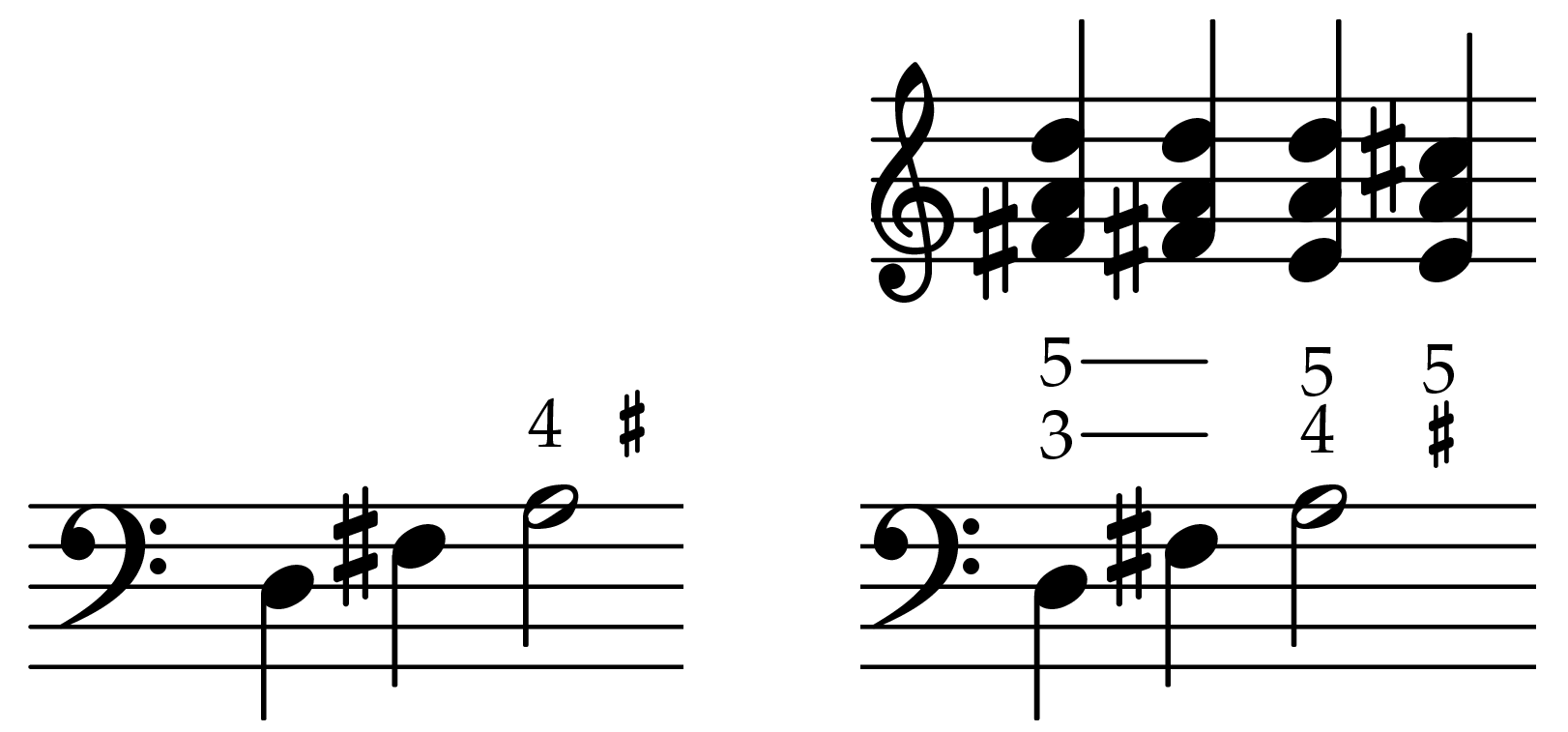
Sometimes composers use a horizontal line to show how long a chord stays in force.
A horizontal line means
“Keep the chord the same, even though the bass notes are changing”
It does not mean “All the bass notes under the line get the same figure.”
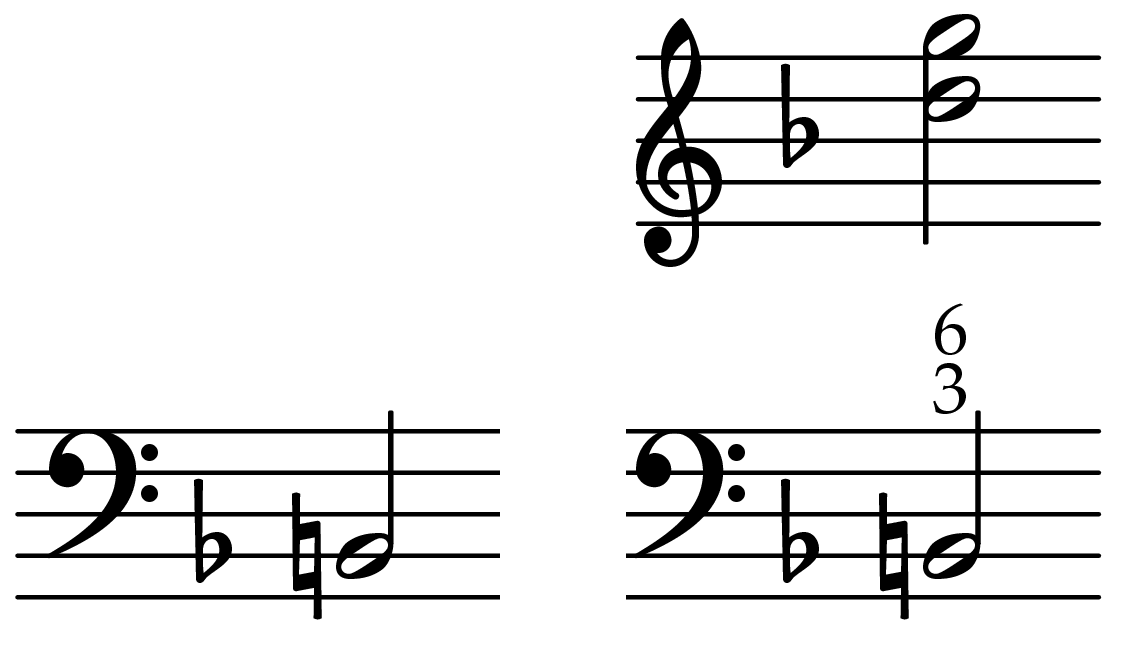
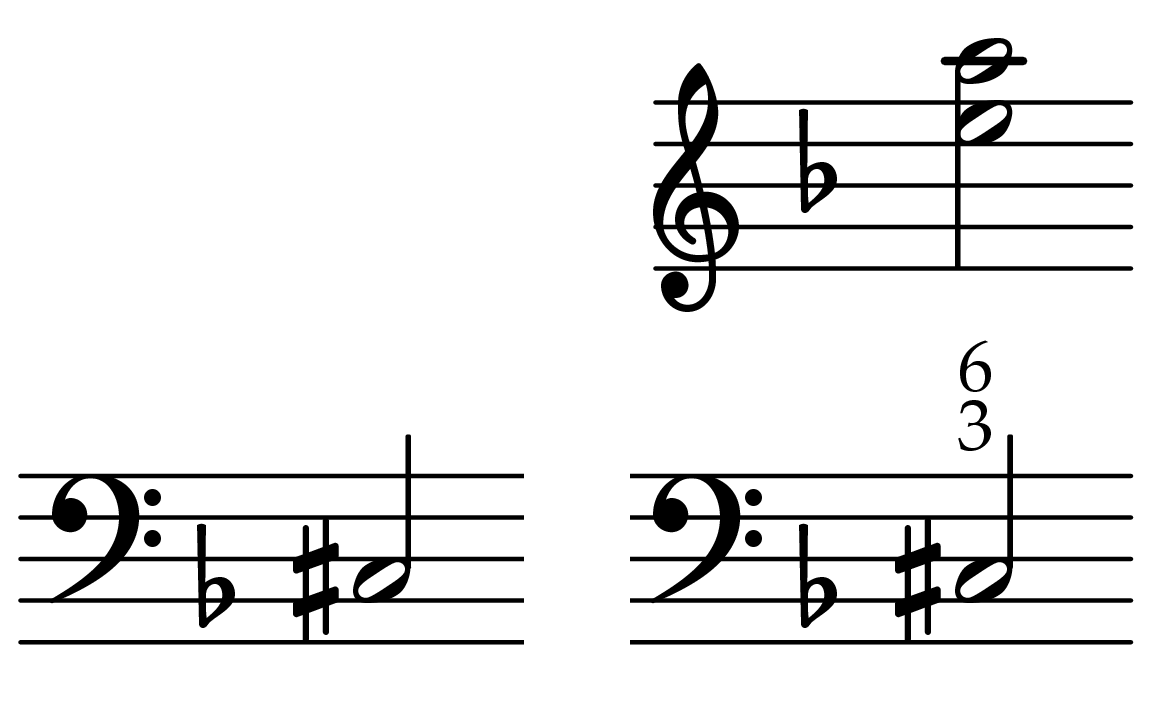
Another abbreviation you need to know is that any bass note with a raised accidental in front of it is a 6/3 chord. This rule doesn’t apply as well to music written starting in the mid 18th-century, but for our class it will work very well.
 |
 |
|---|
You will find out that historical figured bass parts:
often are missing important figures
have some big errors in them
use non-standardized figuring
In other words, a lot of the answers have been left out.
This is a HUGE ADVANTAGE to the student of harmony. You will be forced to think about what is correct, and more importantly, why it is correct.