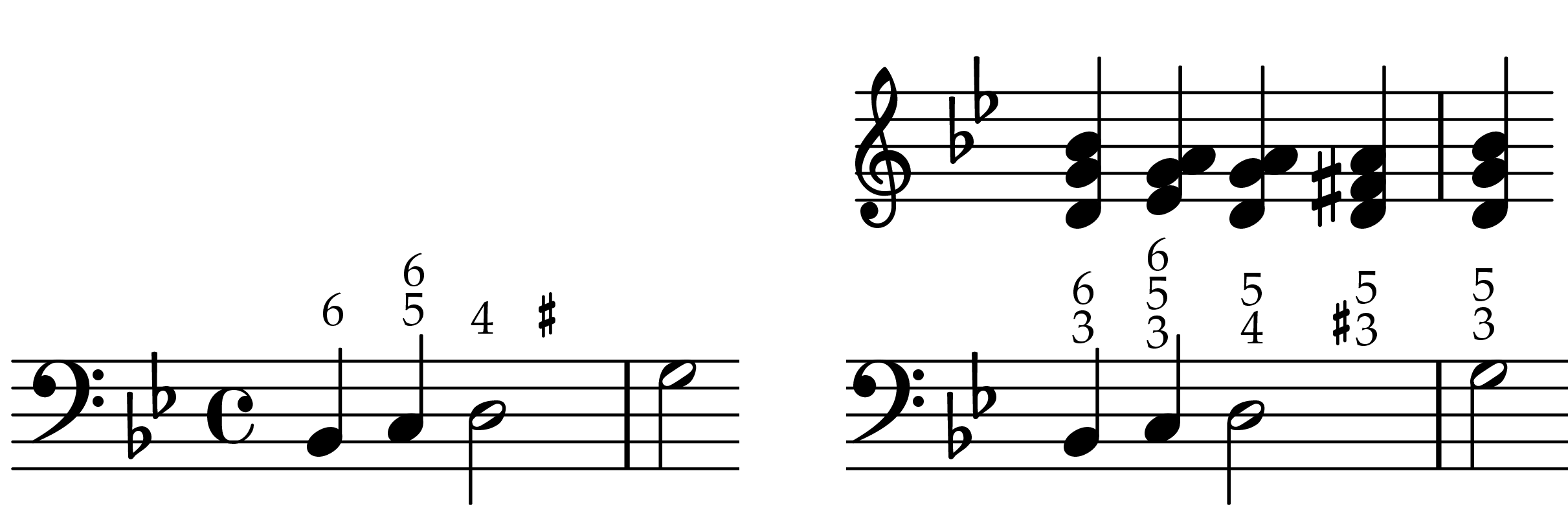
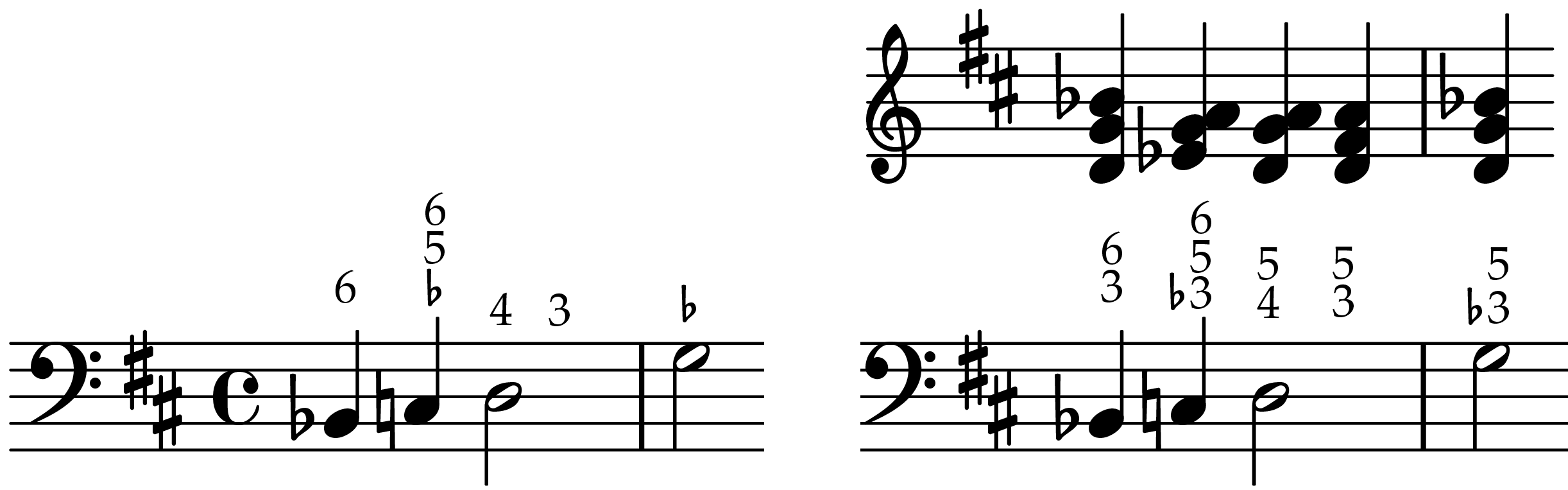
Figures are key signature specific, so even if a composer has wandered into a remote key, the current key signature governs the figures.
The following two examples are played with the exact same pitches, but have very different figures, due to the different key signatures.
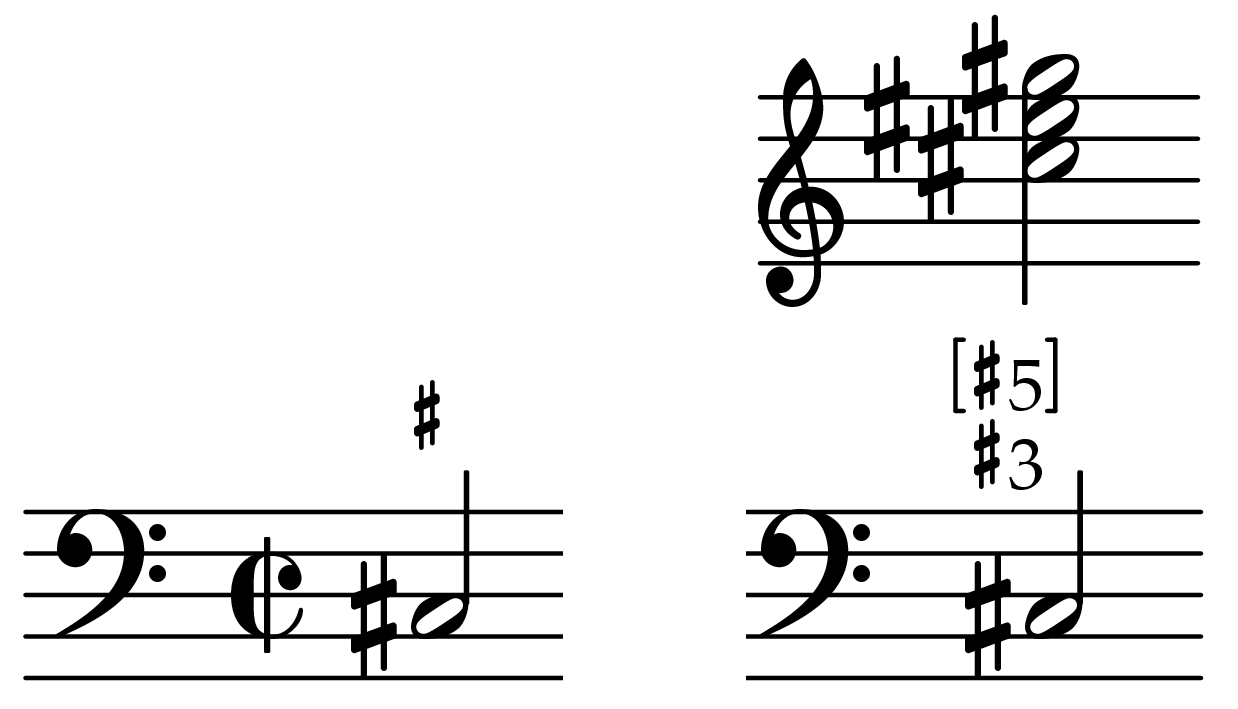
A sharp by itself is an abbreviation for #3, which means "raise the third above the bass."
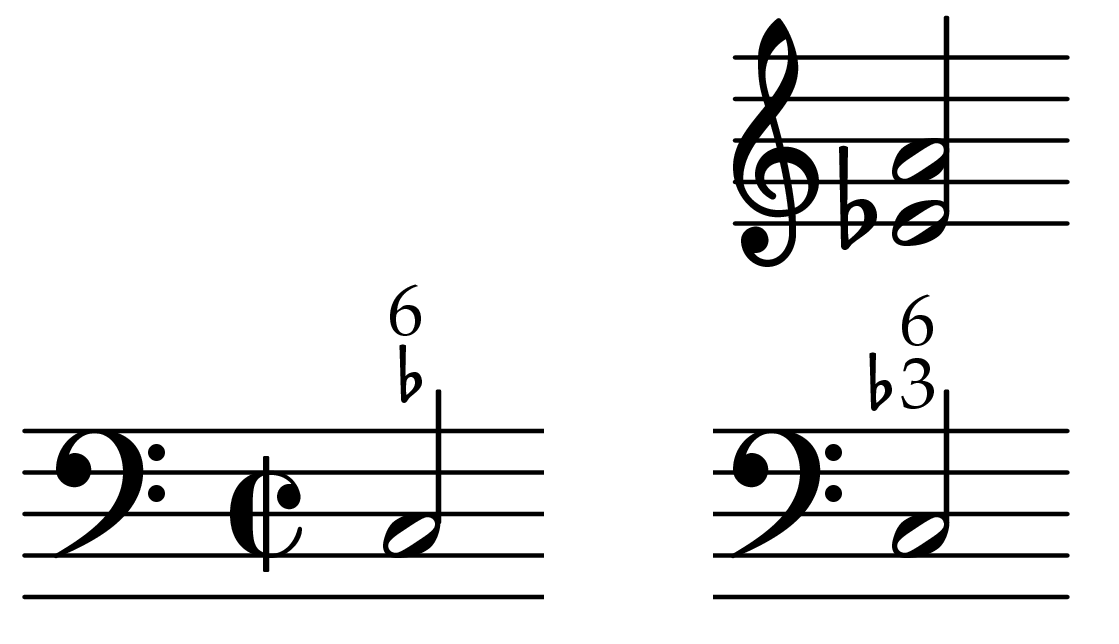
By the same token, a flat by itself is an abbreviation for flat-3, which means “lower the third above the bass.” This sharp or flat can appear with other figures above and below it.
When this sharp or flat appears with no figures above or below it, it is an abbreviation for a root position chord. Many times, the fifth technically should have an accidental as well, but hardly anyone bothers with this, since we usually assume 5s are perfect.
Remember that a flat-3 does not necessarily mean “make the third of the chord minor.” It only means to lower the third ABOVE THE BASS. We only care about intervals above the bass, not roots.
A slash through a figure means that it is altered. Usually it means “raised.”
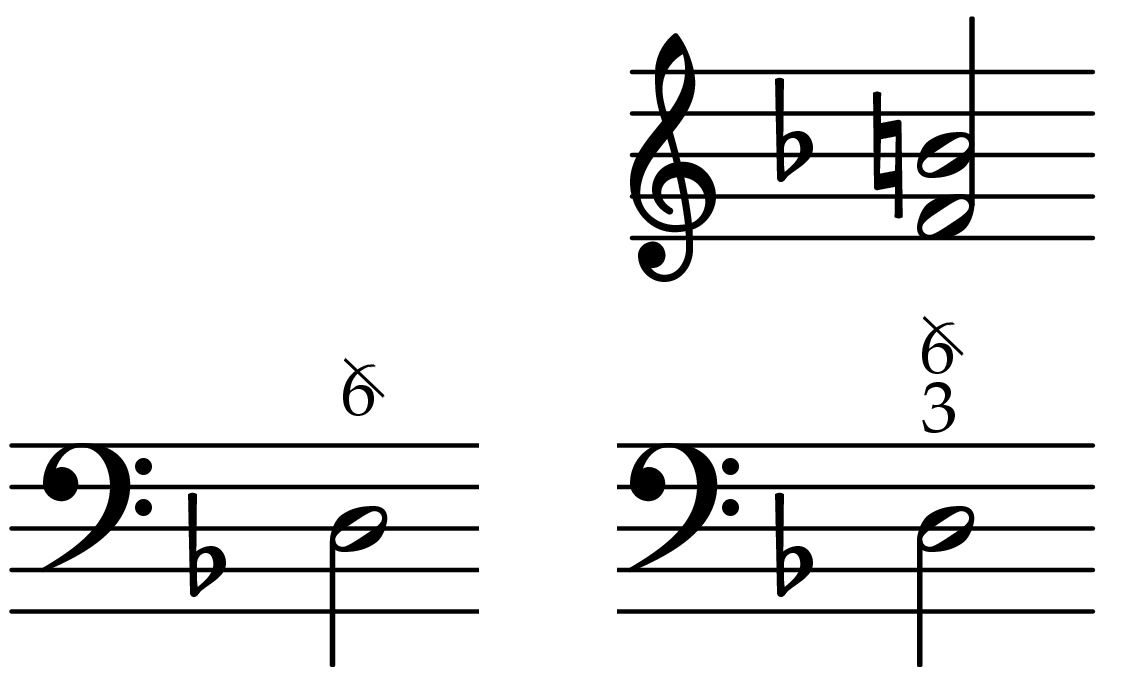
Context always makes it clear whether the accidental is altered up or down. In the previous example, it wouldn’t make sense for the 6 to be lowered, which would create a B-double-flat.
A very common slash is the five-slash. It refers to the diminished fifth interval, and is used even when it is not required by the key signature. In the following example, composers wouldn’t use 6/5, since the numeral 5 means perfect fifth. Since we need a B-flat above the bass note E, we use an altered fifth, the five-slash.
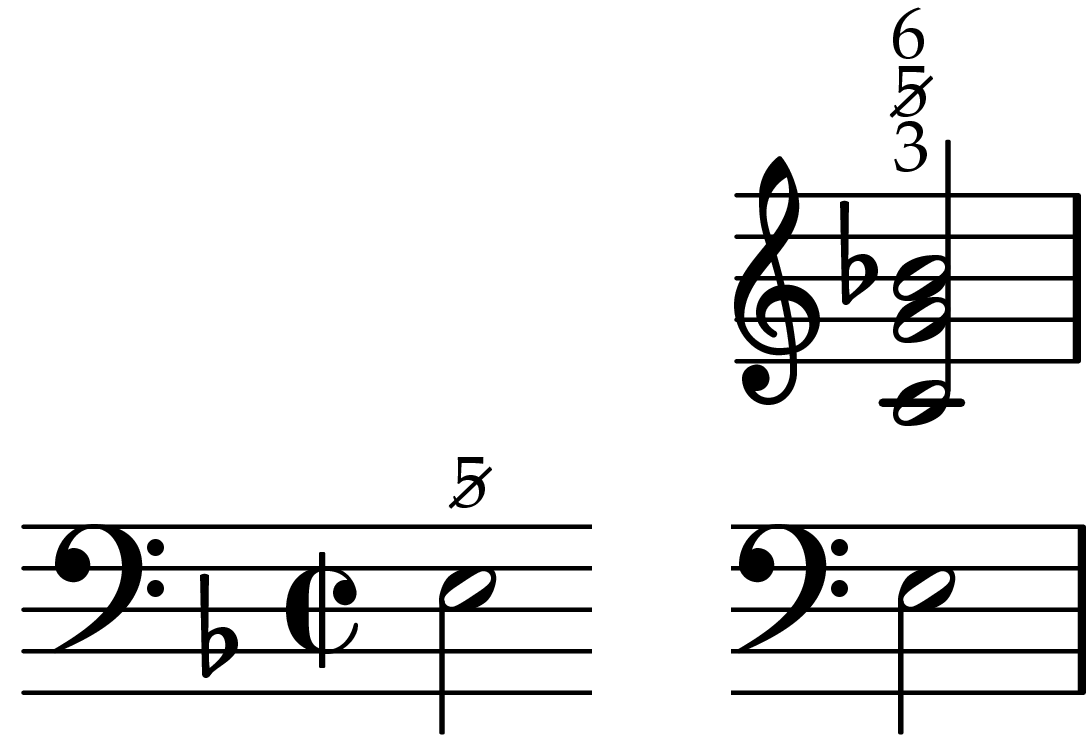
This chord is described in “Figures with the numeral 5.” When this figure (slash-five or flat-five) is found by itself, the full figure is 6/5-slash/3.
5-slash means the same thing as 5-flat. We continuo players recognize that this is a little weird and we live with it.