EXERCISE #1
All 5/3 chords
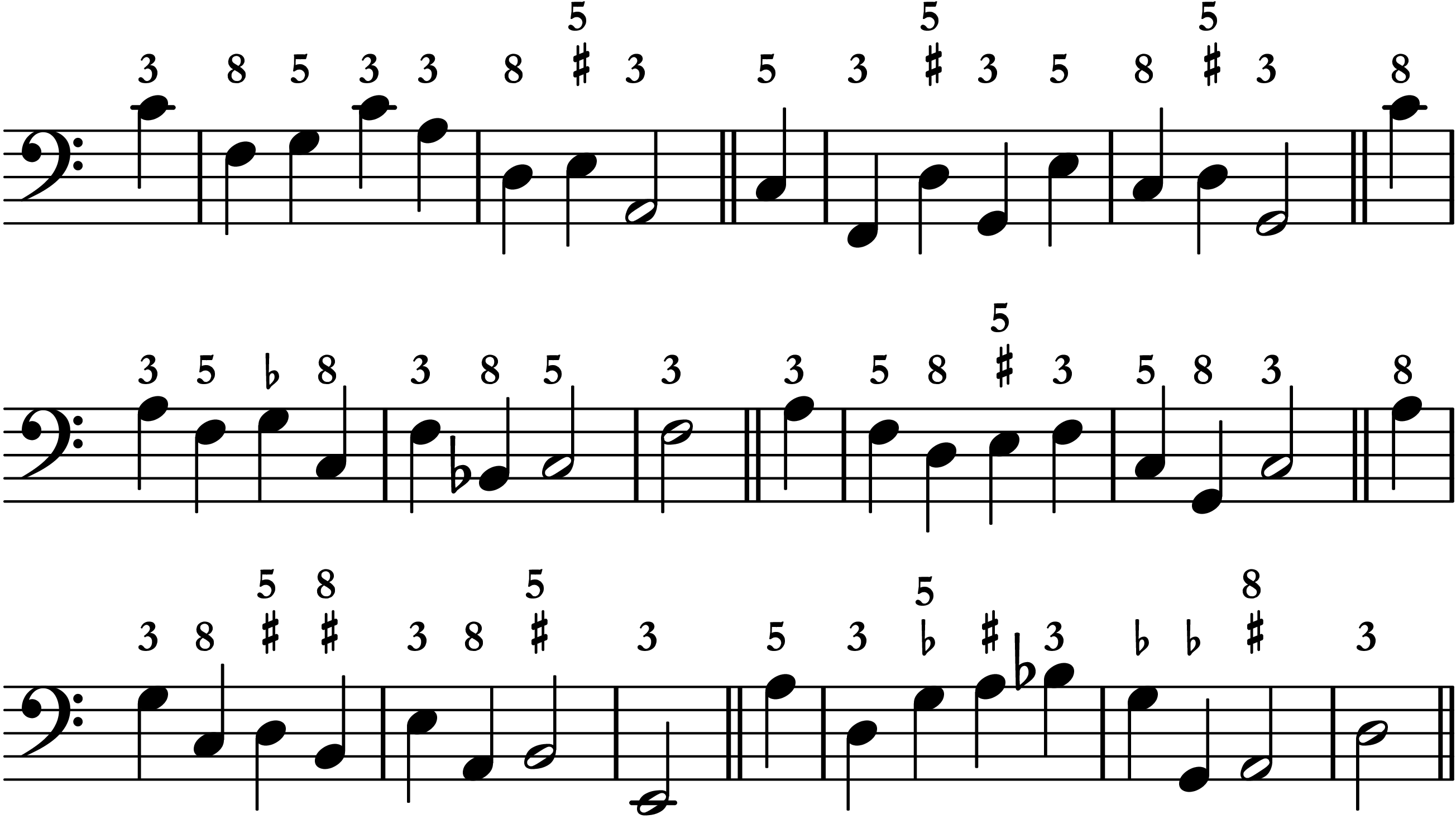
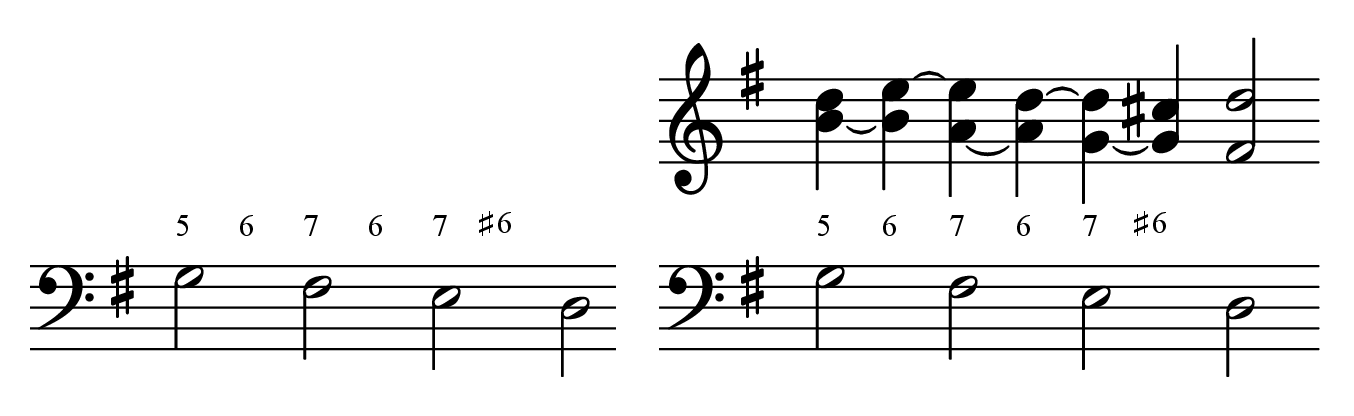
This is from CPE Bach’s Versuch, he composed it so students could start thinking about intervals while playing chords. Thinking of intervals instead of roots is the key to polyphonic playing.
Play this exercise in four parts: 3 in the RH, the printed notes in the LH. Play only 5/3 chords (“root position” chords). The printed number refers to the interval which should appear in your soprano voice. So the first chord in your RH will be (from tenor to soprano): G – C – E.
Notice that Emanuel is already teaching us some important things: he is showing us how to modulate to common keys.
Transpose this to every key (or at least every key you think you may wish to improvise in the future). If you do this, you will have enough chords in your improvisation repository to be able improvise full pieces!
EXERCISE #2
The #44#
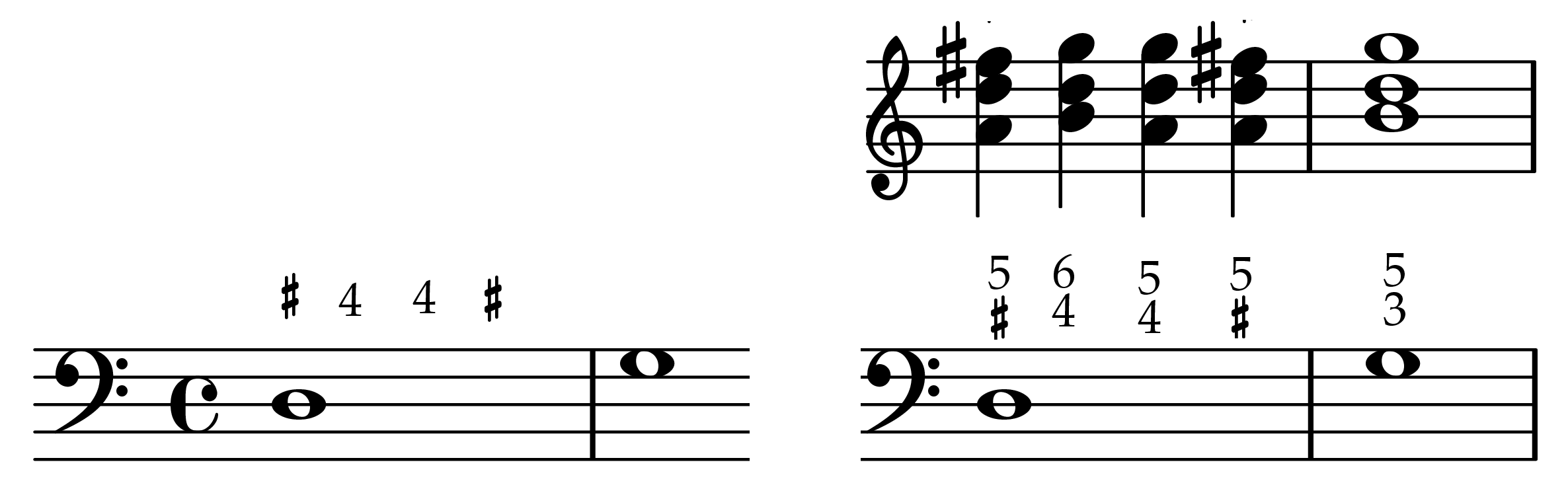
This is the simplest way to set a tonal center. By virtue of the suspension on the third chord, it is also an easy way to confirm the meter, since the suspension, by its very nature, makes that beat sound strong.
Here is #44# in minor. Notice which note needs to be lowered to make it sound minor.
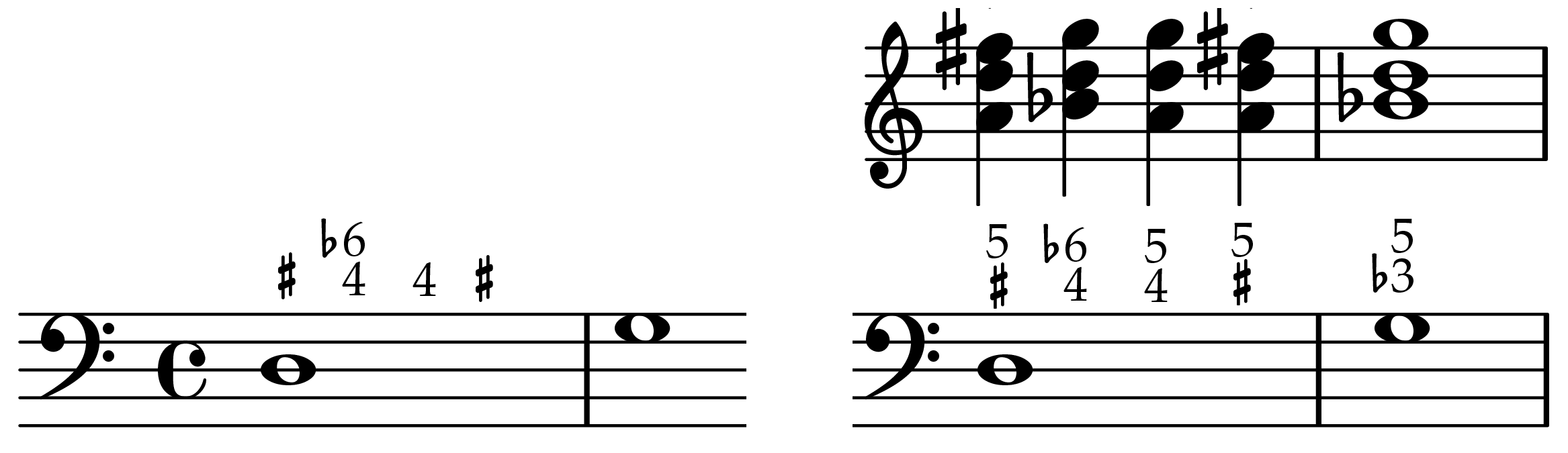
You must practice #44# in all RH positions. Start with easy major and minor keys. Play it in duple time and in triple time. Don't forget that you start on the dominant chord, not the tonic chord.
When you transpose, don’t transpose by half-step (because you’ll play mechanically), but transpose via the circle of fifths (e.g., C-F-Bflat; or C-G-D)
EXERCISE #3
The Cadential Formula
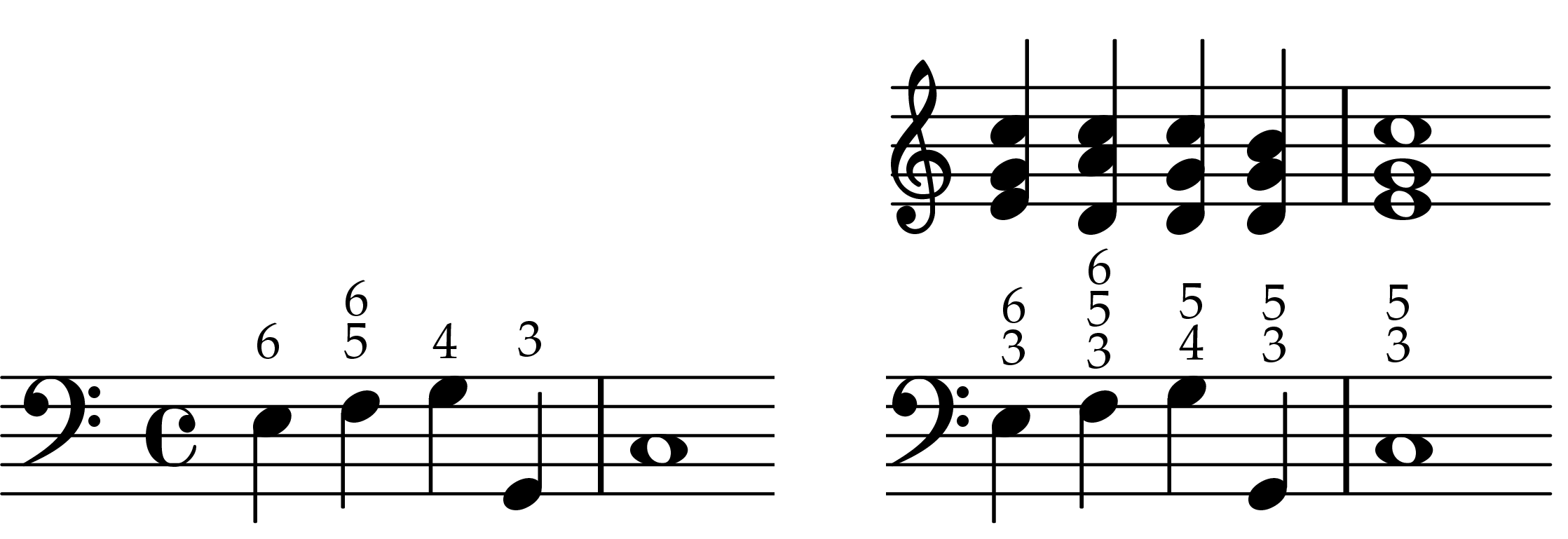
Here’s the cadential formula in minor. Notice that the second chord needs a lowered third to sound truly tonal.
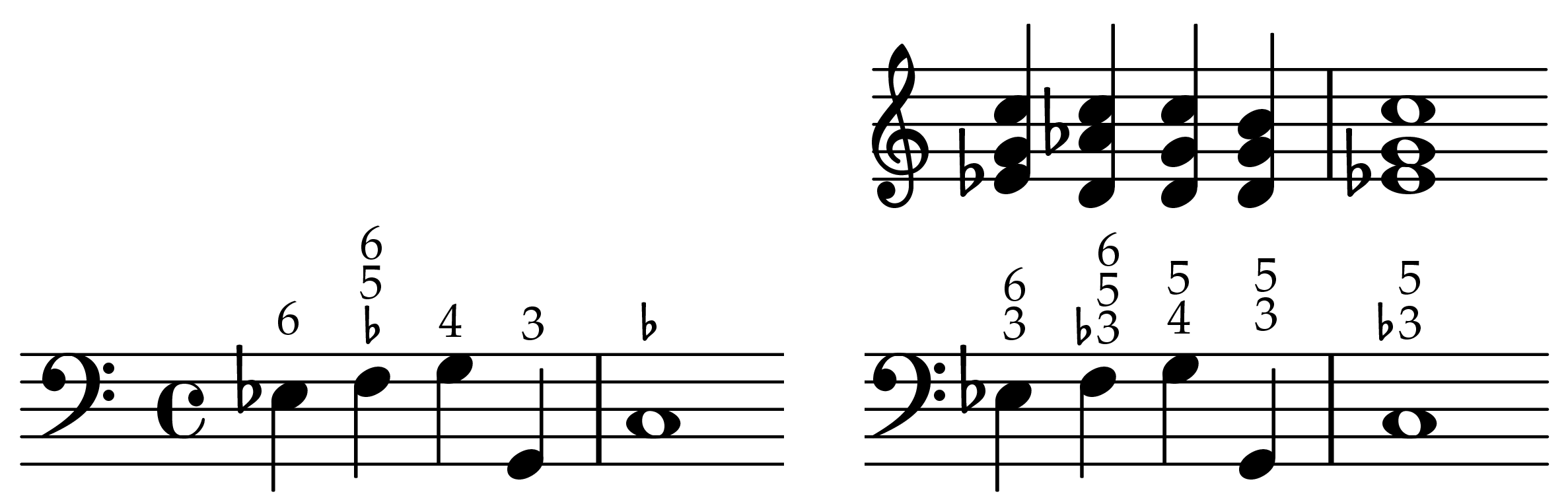
If you like, try it with a major third: it’s not wrong, it just sounds a little modal.
You'll recognize the cadential formula right away. It's one of the building blocks of tonal music. Like #44#, it sets the tonal center as well as the meter, by virtue of its suspension.
Notice that like the suspension on the third chord, the seventh is prepared by common tone. This means the first chord is interlocked with the second chord through the seventh; the second chord is interlocked with the third chord through the preparation of the suspension; and the third chord is interlocked with the fourth chord through the resolution of the suspension.
So when practicing the cadential formula, it's helpful to pay special attention to the voice that has the seventh and the suspension. I like to think of this note as an "anchor" around which the other RH voices move. In the above example, the C in the RH is the “anchor.”
EXERCISE #4
The Descending Tetrachord
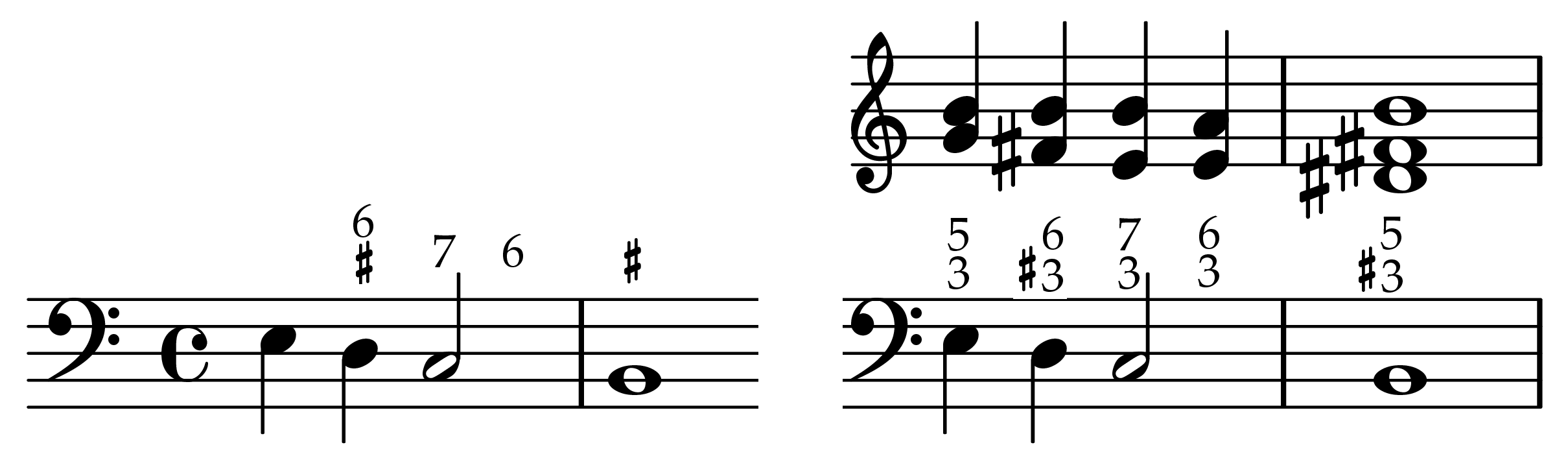
(notice again that there should technically be a #5 above the bass note B. 5 is assumed to be a perfect fifth unless otherwise notated, so there’s no reason to write the sharp.)
I think of the descending tetrachord as a tonal "wrench." No matter what key you were in, once you play the descending tetrachord in a new key, you’ll be wrenched into that key. The descending tetrachord is very useful for quick modulations.
Because the descending tetrachord has parallel first inversion chords, it's easy to get trapped into playing parallel octaves. When you're more experienced, you'll be able to avoid this trap easily. For the time being, play the descending tetrachord with only two voices in the RH (don't double the bass voice). Luckily, this means you only need to practice the descending tetrachord in TWO positions.
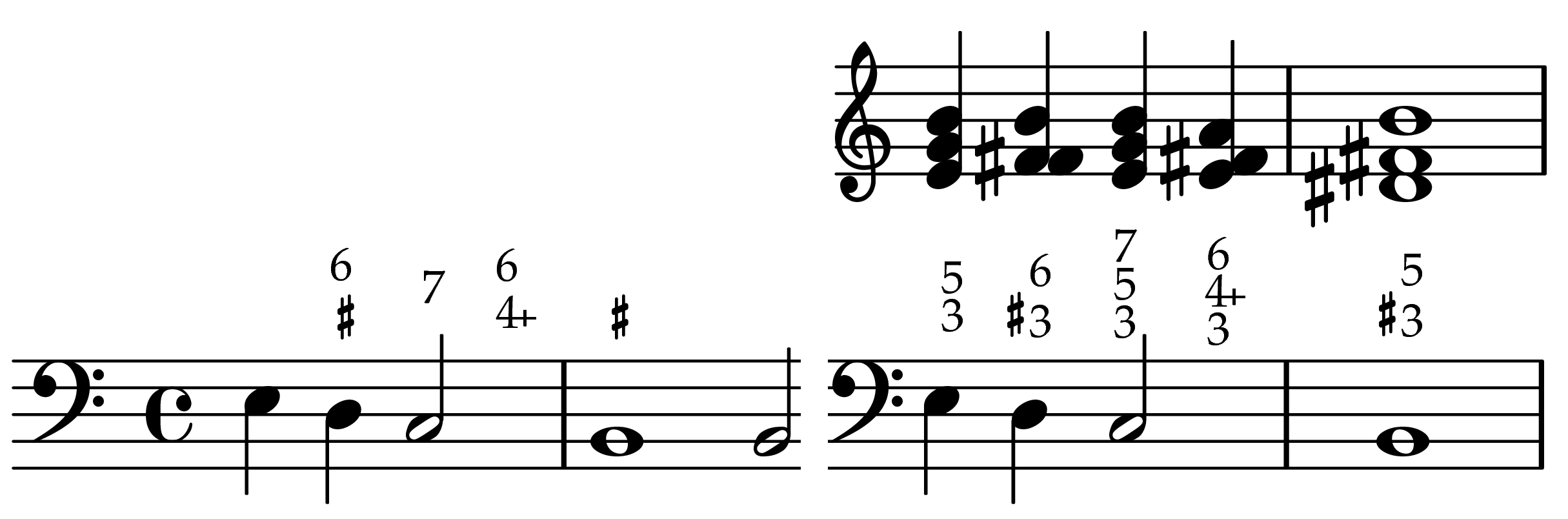
It’s relatively common in the descending tetrachord (in any Phrygian cadence, actually) to resolve the 7 to a 6/sharp-4.
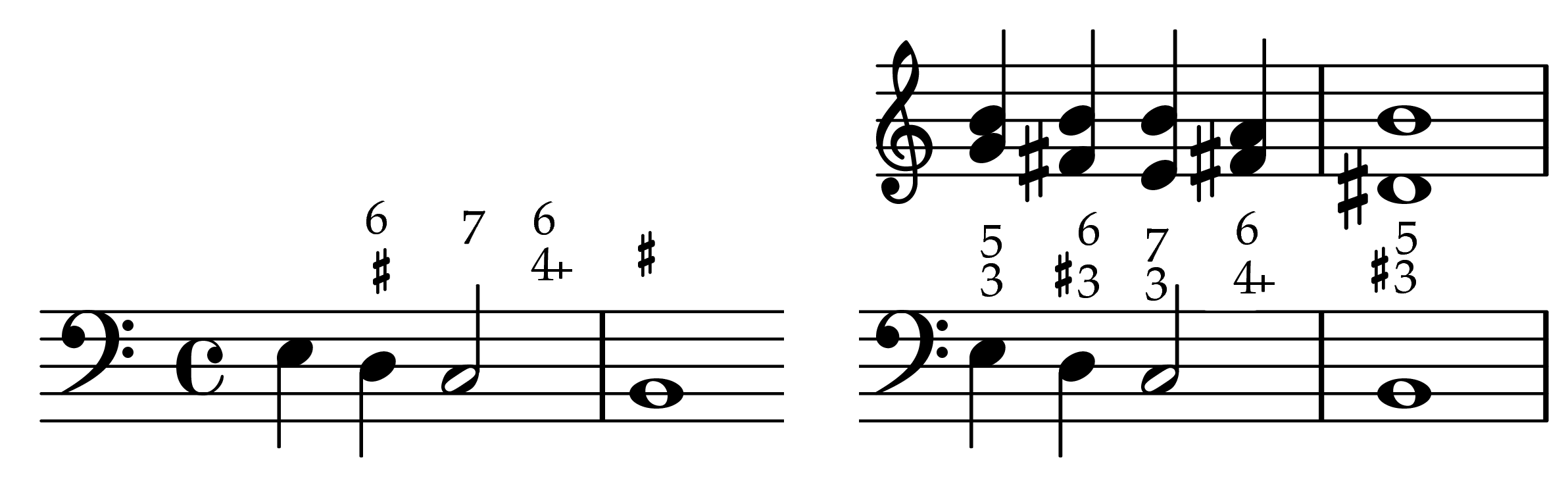
When you’re a little more advanced, you can start playing the descending tetrachord in four voices. One little hint – to avoid parallels as well as melodic augmented seconds, double the third in the penultimate chord.
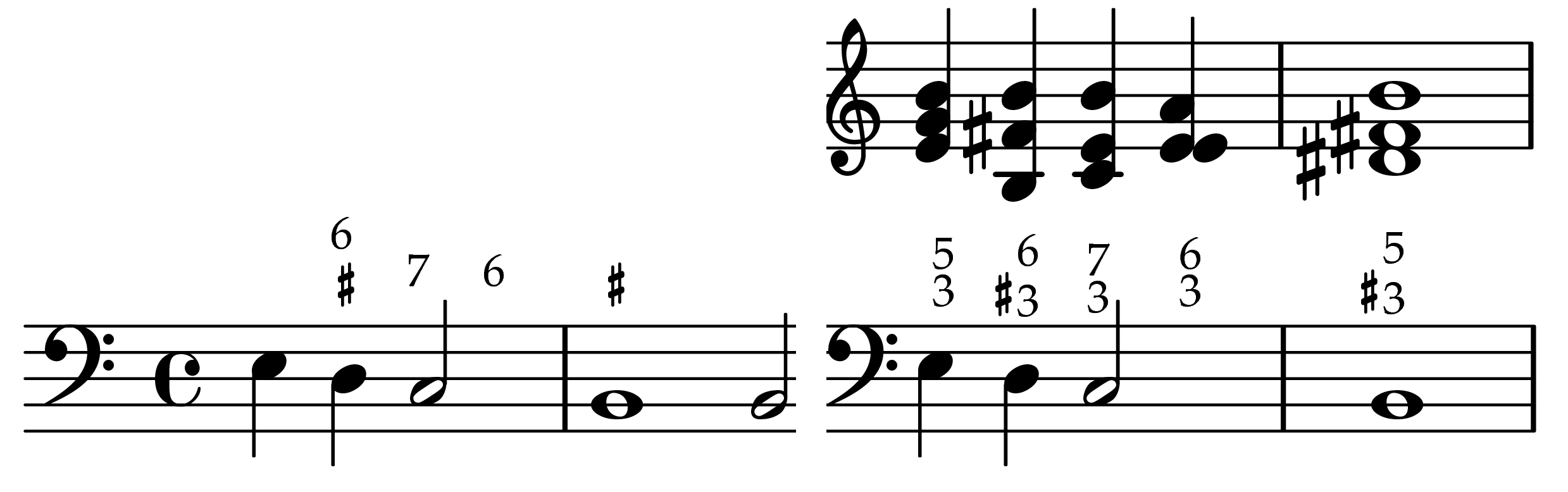
You can also use our old friend the sharp-6/4 for the last chord, which can get you out of some parallel/doubling jams, particularly if you play a 7/5/3 instead of 7/3.
Sequences
I’ve avoided the concept of root as much as possible in this document, because the concept of root simply did not exist in the minds of composers before Rameau. There is one important harmonic event that is difficult to talk about without mentioning roots: sequences.
A harmonic sequence is a series of repeated root motions. The most common is the descending circle of fifths.
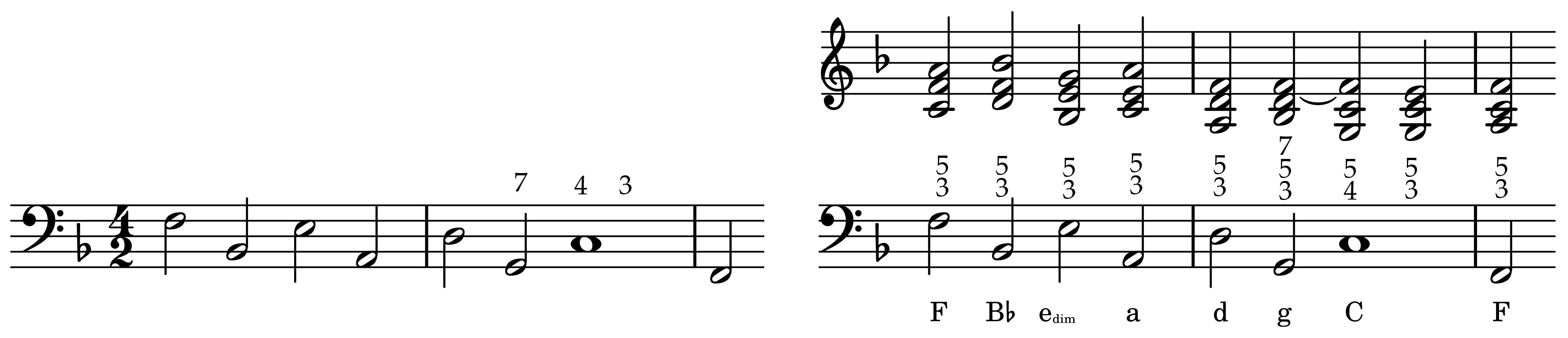
This is the diatonic descending circle of fifths. It doesn’t use any accidentals, so it stays in F major throughout.
It isn’t very common to see the descending circle of fifths in all root position chords like the above example. It makes for a jumpy and bad bass line. More often you will see it using inversions:
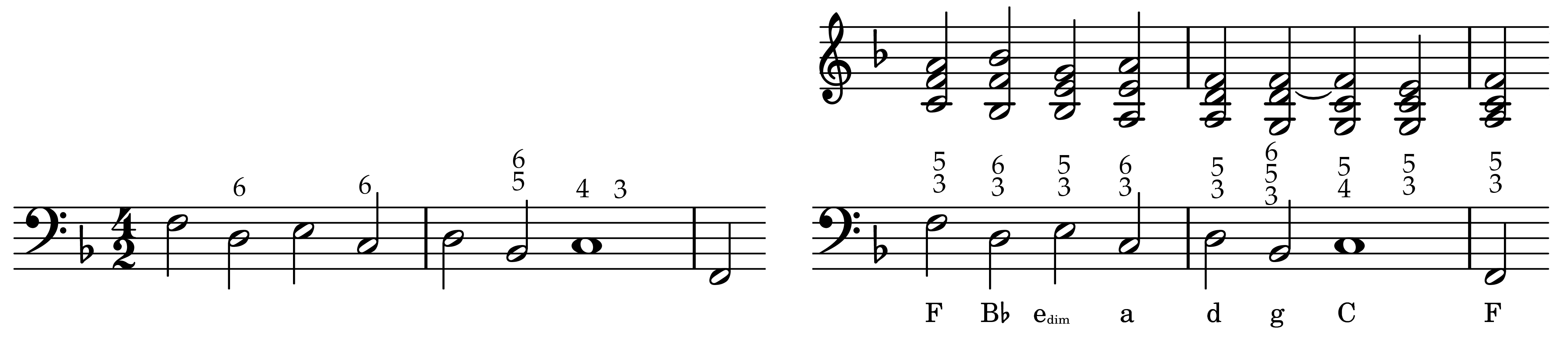
Another sequence is down a third, up a fourth.
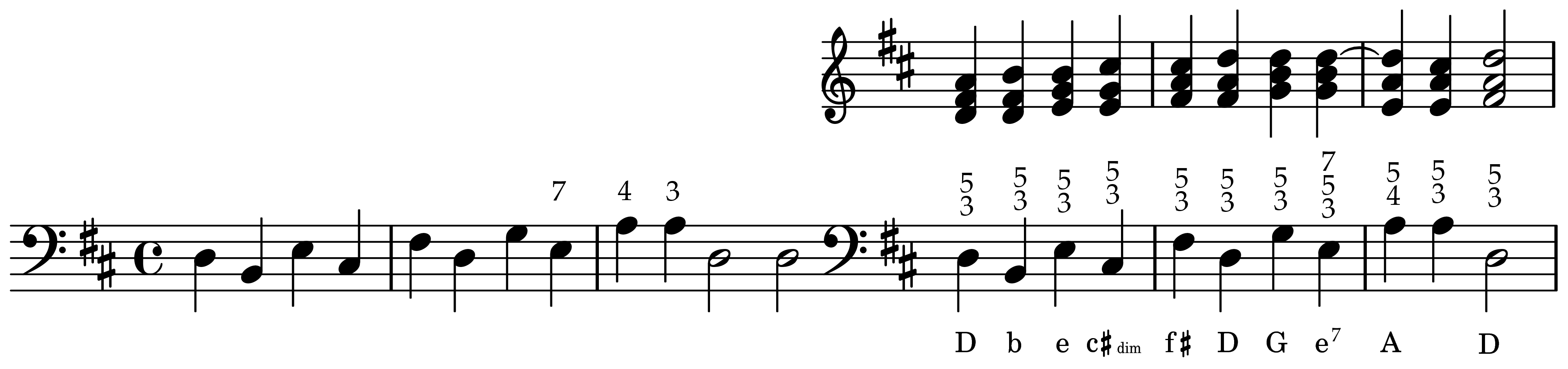
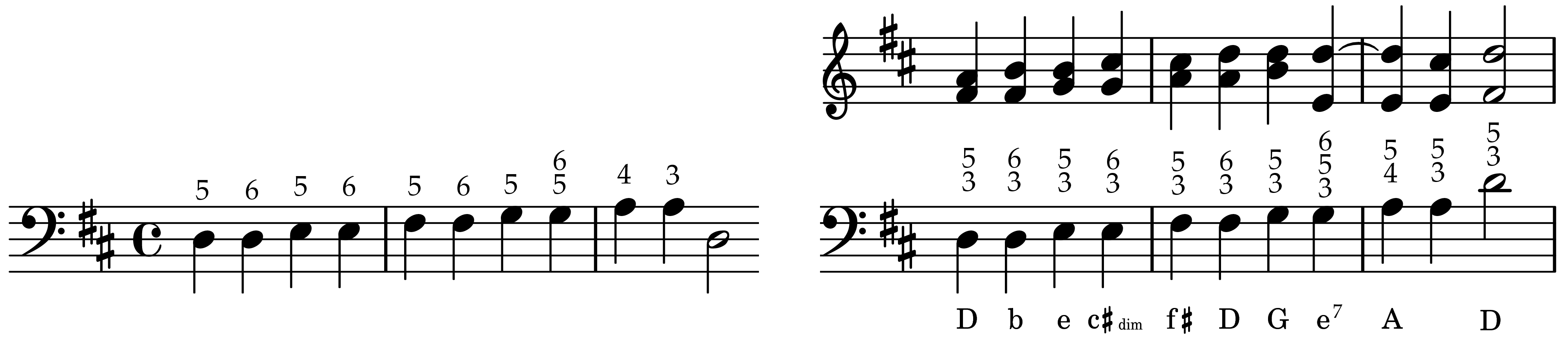
This sequence is sometimes called “ascending 5-6” by modern theorists because it sometimes appears with inversions that produce the following figures.
Another related sequence is the “descending 7-6” sequence.