The most common usage of the numeral 4 is the start of a 4-3 suspension (or as part of a double suspension like 9/4-8/3).
It’s also commonly found as part of a seventh chord in third inversion. It’s usually abbreviated as 4/2. The full figure is 6/4/2.
When this chord is a dominant seventh chord, the full figure is 6/sharp-4/2. This figure is usually just abbreviated to 4-sharp.
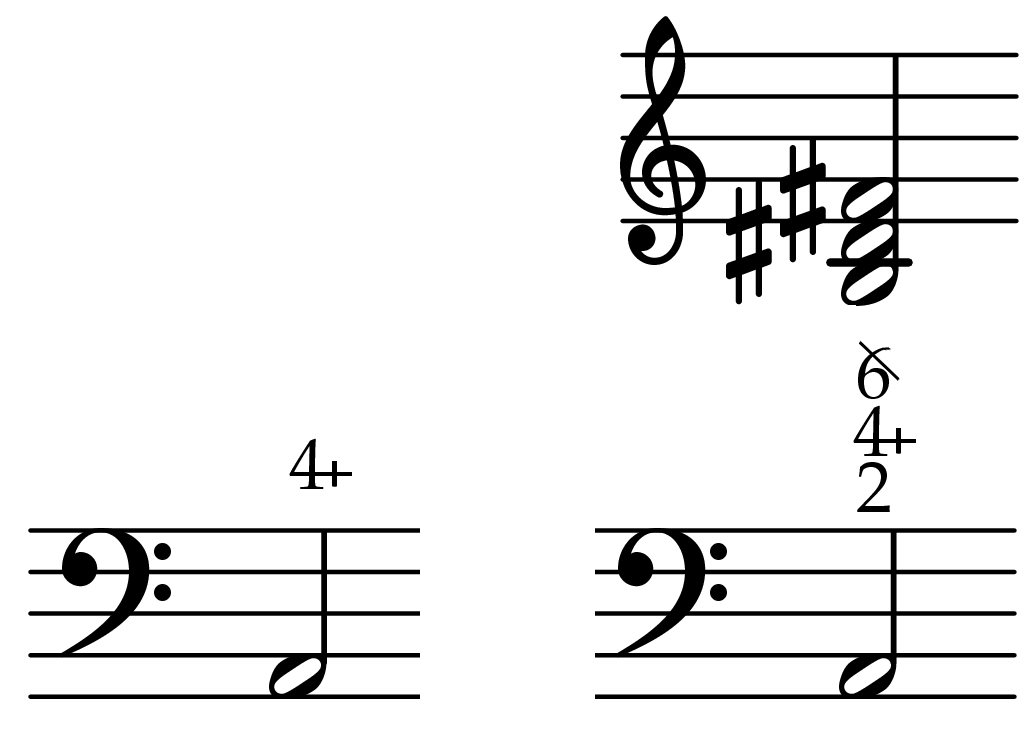
Notice that there really should be a sharp-6 in the figure on the left. But this is the kind of accidental that usually gets left out. Try playing the chord with a natural-6, it just doesn’t sound right.
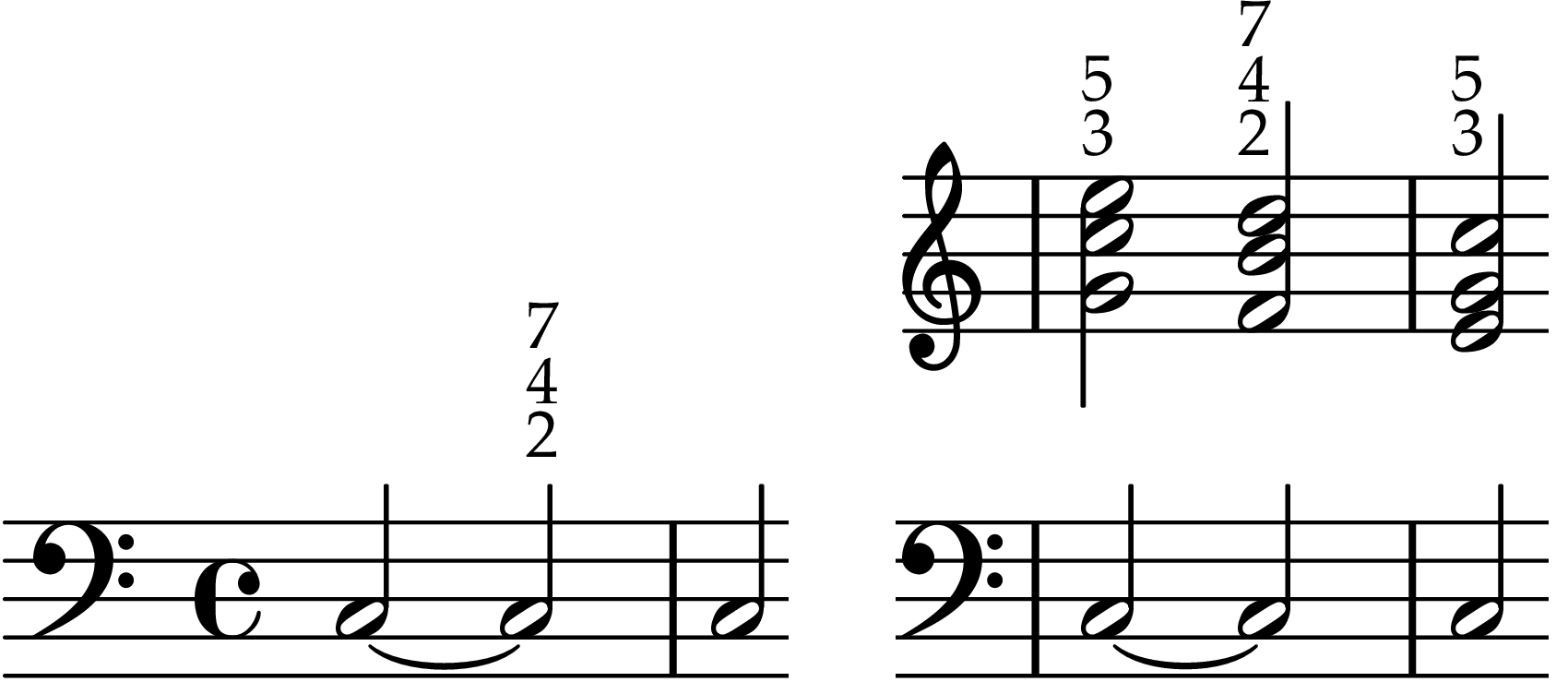
Another pretty common chord that uses the numeral 4 is the 7/4/2, which usually appears over pedal points.
Least common in the 17th/early 18th-century is the 6/4, (and its cousin 6/4/3) which are described in “Figures with the numeral 6.” The 6/4 became a popular substitute for the 5/4 in the mid-18th-century at cadences.